
Insulation Company in Lomita, CA
Blown-in insulation is the most common job we tackle in Lomita, and the reasons trace back to what this city is: a fully built-out South Bay community of 1940s and 1950s homes where the original attic insulation has either compacted into dust or was never adequate in the first place. The marine layer that rolls in off the Palos Verdes bluffs doesn’t just make mornings gray. It pushes damp air into attics through every gap and seam, and that moisture is why Lomita homeowners should think about insulation differently than folks inland do. Upgrading an older Lomita home is about comfort, condensation control, and evening cool-down as much as it’s about R-value on a chart. Call us at (866) 605-6949 to talk through what your attic actually needs.
Why Lomita Homes Are Different
Lomita’s housing stock is overwhelmingly postwar tract homes and bungalows from the 1940s through the 1960s, most of them single-story and built on tight lots. That era of construction means original attics often have a thin layer of fiberglass batt between joists, or nothing beyond whatever the builder stapled up sixty years ago. Many of these homes still have knob-and-tube wiring in the walls, which changes how we approach retrofit work. Additions from the 1970s and 1980s frequently feature low-pitch or flat roofs with shallow attic cavities, and those spaces trap moisture in ways a steep-pitched roof never would.
The climate here is mild by Southern California standards, but the damp onshore air is the variable that matters most. The morning marine layer doesn’t just sit outside. It drifts into attic vents and settles around old insulation, and when the sun burns through by midday, that moisture cycles through a warm-up that accelerates breakdown in organic materials. Compromised insulation in Lomita often announces itself as a musty smell or dark staining on ceiling corners before anyone notices a temperature problem. Before we add any new insulation, our technicians check for moisture damage first. Adding batt over wet or moldy material is a waste of money and hides a problem that gets worse.
Our Main Lomita Services
Most Lomita homeowners reach out about two things: bringing an under-insulated attic up to current standards, or air-sealing a home that breathes through every gap in its postwar framing. Here’s how each service plays out in this city.
Attic Insulation in Lomita
Older Lomita attics are where heat escapes in the evening and where the morning marine layer finds its way inside. A proper attic insulation job here starts with a full inspection of what’s already up there, because sixty-year-old batts are often compressed, rodent-damaged, or showing the telltale dark patches that come from condensation cycles. We specify the material that matches the attic’s pitch and depth rather than forcing whatever is easiest to install. Flat-roof additions need a different approach than standard low-slope gable attics, and we’ve seen both on the same Lomita lot more times than we can count. Read more at Attic Insulation in Lomita.
Spray Foam Insulation in Lomita
Spray foam is the right tool in Lomita when the goal is air sealing more than raw R-value, particularly in wall cavities where knob-and-tube wiring makes blown-in work complicated, or in the tight rafter bays of flat-roof additions where batt simply won’t fit. Closed-cell foam from Icynene acts as a moisture barrier as well as an insulator, which matters in a climate where damp air is the persistent challenge. Open-cell Demilec foam does a different job: it fills every irregular gap and kills air movement without the rigidity closed-cell brings. The choice comes down to the specific cavity and the moisture profile of the space. See Spray Foam Insulation in Lomita for the full breakdown.
What happens when you call
- 1
A real person answersNo phone trees — you reach a local pro.
- 2
You get an upfront price rangeHonest numbers before anyone is dispatched.
- 3
A background-checked tech heads outLicensed & insured, dispatched right away.
- 4
You approve before work beginsNothing starts until you say go.
Blown In Insulation in Lomita
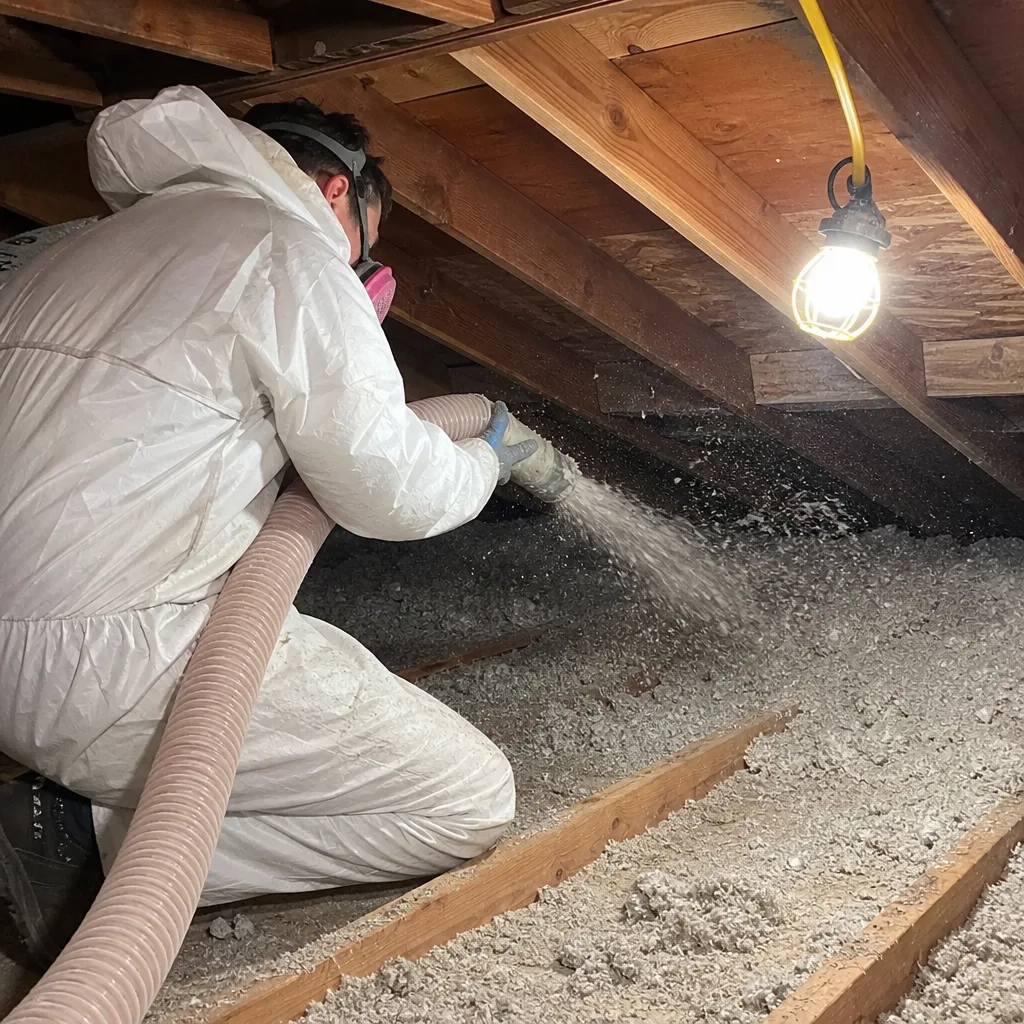
Blown-in insulation is the workhorse for Lomita’s older attics because it’s the one material that can be installed evenly over existing batts, around odd framing, and into the shallow, awkward spaces that define postwar additions here. We regularly find attics in this city with R-11 or R-13 of original fiberglass that has settled to half its rated depth, and the fix is often a dense layer of blown-in material laid directly over it. The marine layer makes compression the enemy here: damp air cycling through an attic accelerates settling, so a proper blow-in job includes making sure the material is applied loose enough to keep its full R-value, not packed down like a blanket. If you’re wondering whether blown-in makes sense for your Lomita home, the short answer is yes for most attics built before 1980, and the full breakdown lives on our Blown In Insulation hub page.
Cellulose Insulation
Signs you need it
Your attic has old fiberglass batts that are compressed, dusty, or damp at the edges, and your energy bills climb every summer when the marine layer clears and the sun starts working on your roof.
What it costs in Lomita
Cellulose insulation in a typical Lomita attic runs $1,800 to $3,500 depending on square footage and the depth needed to hit current R-value targets.
How we do it
We remove or correct any moisture-damaged material, seal the major bypasses around plumbing and electrical penetrations, then blow in recycled GreenFiber cellulose to an even, specified depth so it delivers its rated R-value without settling prematurely.
Blown In Attic Insulation
Signs you need it
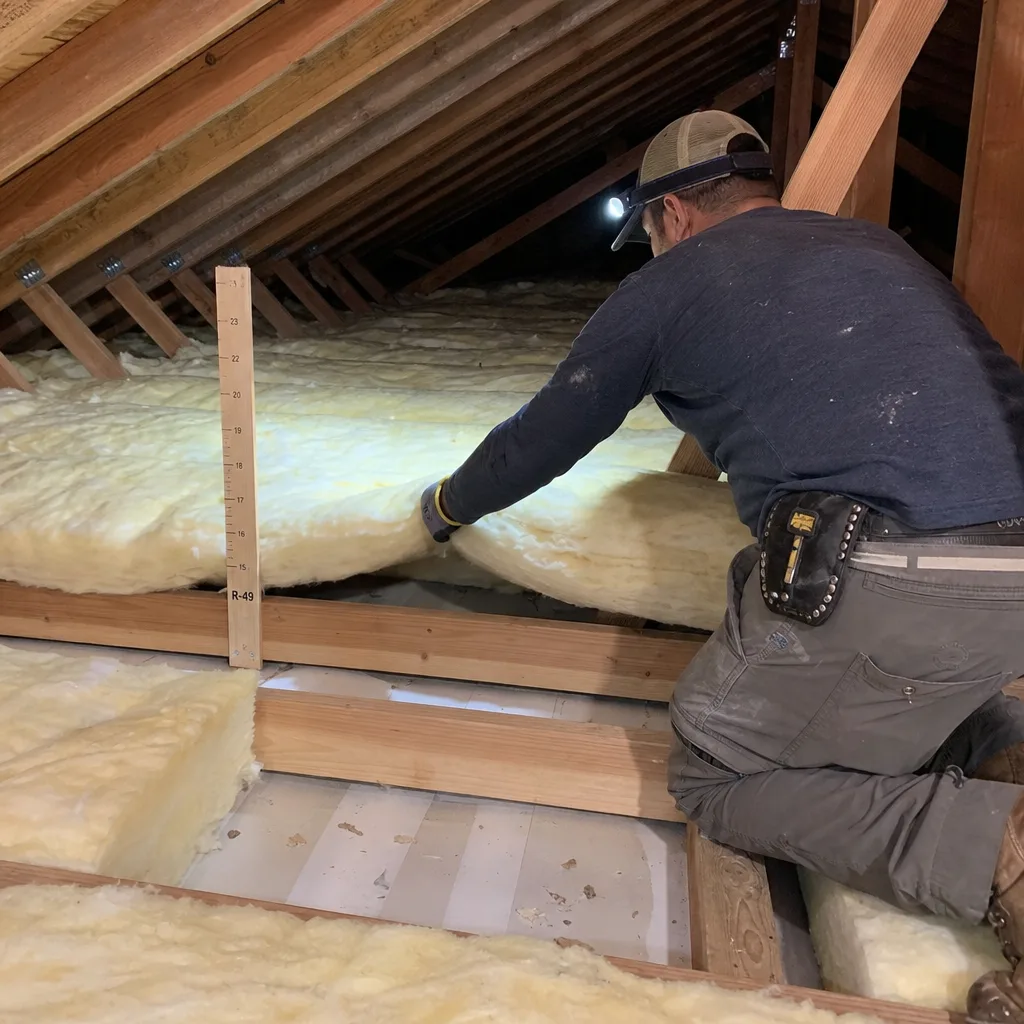
Rooms near the ceiling feel warm by late afternoon, the attic floor has bare spots between the joists, or the existing insulation measures under eight inches deep in a climate that needs more.
What it costs in Lomita
Blown-in attic insulation in Lomita typically costs $2,200 to $4,200 for a 1,000 to 1,500 square foot attic, depending on depth and whether old material needs to be removed first.
How we do it
We measure the existing depth, determine what target R-value makes sense for a coastal South Bay home, then blow a consistent layer across the entire attic floor, working around wiring and framing without burying vent baffles.
Blown In Fiberglass Insulation
Signs you need it
You want an insulation that won’t hold moisture the way cellulose can, and your attic has enough depth to hit the needed R-value with a material that resists settling better than most options.
What it costs in Lomita
Blown-in fiberglass in a Lomita attic runs $2,000 to $3,800, close to cellulose pricing but with a slightly different profile for moisture resistance.
How we do it
We prep the attic by addressing any condensation issues first, then blow loose-fill fiberglass to full depth in a single pass, keeping the material fluffy so it holds its air pockets and its thermal performance.
What Blown In Insulation Costs in Lomita
| Item | Typical range in Lomita |
|---|---|
| Cellulose insulation, 1,000 sq ft attic | $1,800 – $3,500 |
| Blown-in attic insulation, full attic | $2,200 – $4,200 |
| Blown-in fiberglass, 1,000 sq ft attic | $2,000 – $3,800 |
These ranges reflect what we see across Lomita’s 90717 homes. Removal of old or damaged material, extra depth for higher R-values, and awkward access through small attic hatches can all move the number. We quote upfront and we don’t change it after the work starts.
Can you install blown-in insulation over old insulation in Lomita?
Yes, in most Lomita homes we blow new material directly over existing batts as long as the old insulation is dry, mold-free, and not compressed into a mat. We check for marine-layer moisture damage first, because blown-in over damp material locks the problem in.
How long does blown-in insulation take in Lomita?
A typical blown-in attic job in Lomita is finished in one day, including prep, sealing bypasses, and the blow-in itself. Larger attics or those needing old material removed first may take a second morning.
Brands We Service in Lomita
We install products from eight manufacturers and keep a working stock of the most-requested materials: GreenFiber cellulose for blown-in work, Rockwool mineral wool for fire resistance, and CertainTeed fiberglass for standard attic re-insulation. Icynene and Demilec spray foam systems are ordered per project, but most of what a Lomita attic needs is available within days, not weeks. Check our brands page for the full list.
Pricing for Insulation Company in Lomita, CA
| Service | Typical range in Lomita |
|---|---|
| Attic insulation, full attic | $2,300 – $4,800 |
| Spray foam insulation, standard attic | $2,800 – $6,200 |
| Cellulose insulation, attic blow-in | $1,800 – $3,500 |
| Blown-in attic insulation, full attic | $2,200 – $4,200 |
| Blown-in fiberglass, attic floor | $2,000 – $3,800 |
| Wall retrofit, blow-in or injection | $2,700 – $5,400 |
| Soundproofing with mineral wool (single room) | $1,200 – $2,600 |
| Spray foam air sealing in rafter bays | $1,900 – $4,200 |
Two things push pricing up in Lomita specifically: flat-roof and low-pitch additions that limit working space and slow installation, and the moisture remediation that sometimes precedes an insulation job in attics that have taken decades of marine-layer damp. Every quote we give is a fixed number before we begin, which means the price on paper is the price you pay.
Neighborhoods We Serve in Lomita
Lomita is compact, about two square miles, and we cover all of it. Most of our work clusters in the older residential streets west of Narbonne, around Lomita Park, and in the bungalow blocks near Eshelman Avenue, but we also handle the larger lots off Palos Verdes Drive North and the hillside-adjacent homes closer to Rolling Hills Estates.
- Lomita Park area
- West of Narbonne Avenue
- Near Eshelman Avenue
- Oak Street corridor
- Fleming Middle School area
Response time across Lomita is usually one to three business days for estimates, and we schedule installations within a week in most cases.
Service Area – Cities Near Lomita
Beyond Lomita’s 90717 zip code, our crews regularly work in Torrance, CA, Rolling Hills Estates, CA, West Carson, CA, and Manhattan Beach, CA. The housing stock and coastal moisture patterns are similar across these South Bay cities, which means the diagnosis and material choices we recommend in Lomita carry over.
Serving Lomita, CA — Our Local Coverage Area
We’re based in the Lomita area and know this community well. Use the map below to see our service coverage — if you’re nearby, we can almost certainly help.
FAQs About Insulation Company in Lomita
In most cases, adding attic insulation to an existing Lomita home does not require a city permit. If the job involves wall retrofit work that opens cavities, or if your home has knob-and-tube wiring that must be addressed first, the scope can shift and permitting becomes a question we’ll answer during the estimate.
Most Lomita estimates happen within one to three business days, and installation typically schedules within a week. Attic blow-in jobs are single-day projects in most cases. Spray foam work takes longer because the foam needs cure time before the space is re-entered.
We do, and it’s common on the 1940s and 1950s homes that dominate Lomita’s housing stock. Insulation can be installed around knob-and-tube wiring in many cases, but we’ll assess the specific situation during the estimate, because older wiring that’s been disturbed or covered improperly creates a fire risk we won’t take.
What happens when you call
- 1A real person answersNo phone trees — talk to a local insulation pro.
- 2You get an upfront price rangeHonest numbers before anyone is dispatched. No surprises.
- 3A background-checked tech heads outLicensed & insured, typically within 30–60 min.
- 4You approve before work beginsNothing starts until you say go.
What Lomita Customers Say
"Found and sealed a gap around the chimney chase that was basically an open chimney to the attic."
— Brandon Wong"Work is good and the house is noticeably more comfortable. There was insulation debris left in the hall closet under the attic access that I had to clean up."
— Miguel Garcia"Plastic laid from the front door to the attic hatch and they vacuumed the hallway afterward."
— Heather Walsh