
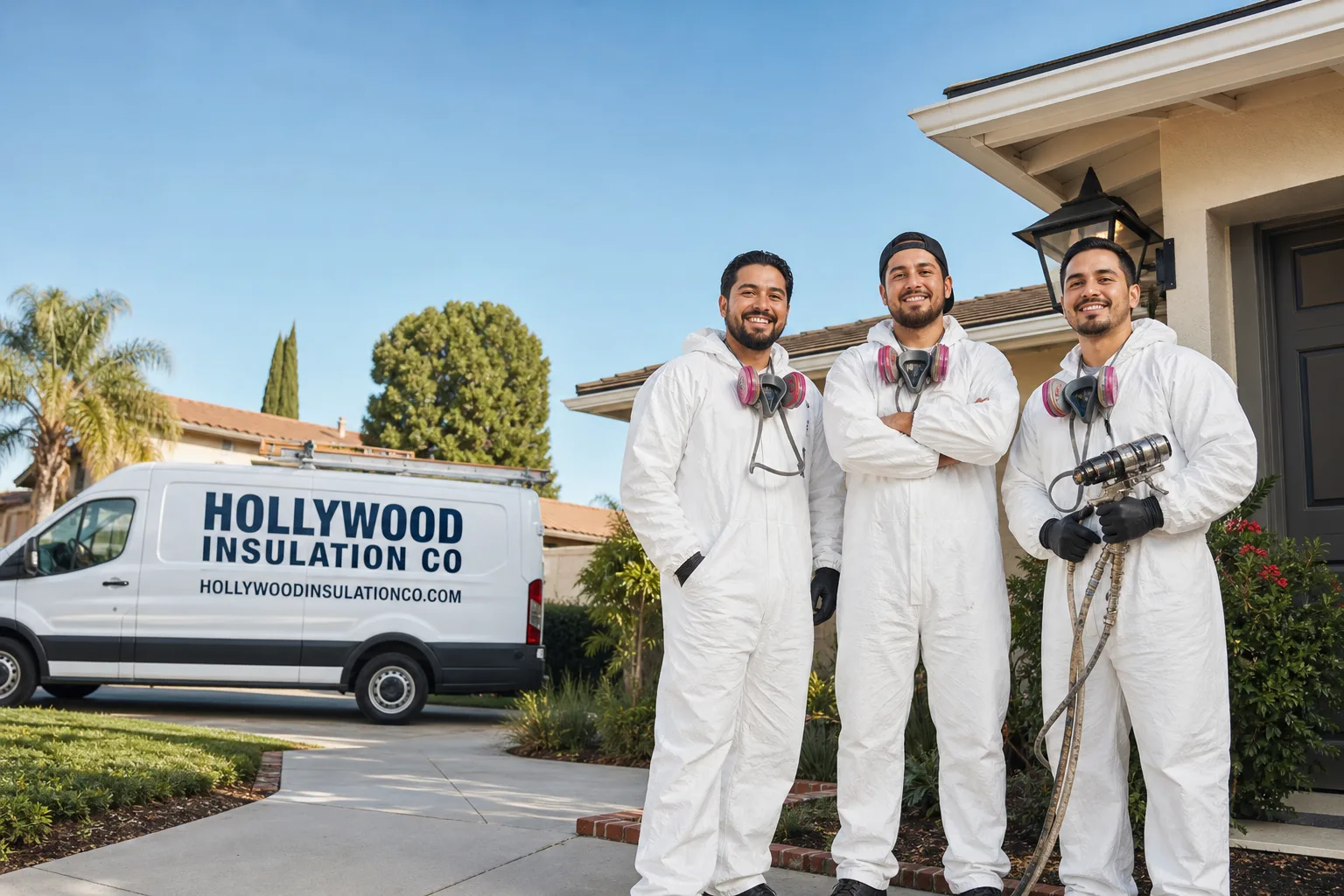
Fast, Reliable Attic Insulation Across Azusa
Attic insulation in Azusa typically runs $1,800 – $4,600 depending on attic size, existing material condition, and whether you’re topping up or starting fresh. Most jobs are completed in one day. If your Azusa home was built before the 1980s and still has its original insulation, you’re almost certainly losing cooling dollars through the ceiling every single afternoon. We know these homes. Our crews work the foothill streets from downtown to the 210 corridor weekly, and we answer calls at (866) 605-6949 with a real person who can schedule a free attic assessment, usually within a few days.
Why Hollywood Insulation Co Is Azusa’s Preferred Attic Insulation Company
We’re a dedicated insulation contractor, not a general handyman squeezing attic work between kitchen remodels. That focus matters in a city like Azusa, where the housing stock tells you exactly what’s wrong the moment you climb the ladder. Our technicians live in this trade. They know what R-8 compressed batts look like, how to spot a thermal bypass around a 1960s attic hatch, and when a radiant barrier will do more for a west-facing ranch than another six inches of fiberglass. Noel Camacho built this company around that diagnosis-first mindset: figure out where the heat is actually getting in, then match the material to the problem. Eight manufacturer brands, three installation methods, one honest recommendation.
We carry fiberglass from Owens Corning, Johns Manville, CertainTeed, and Knauf, mineral wool from Rockwool, spray foam systems from Icynene and Demilec, and recycled cellulose from GreenFiber. No other insulation contractor serving Azusa brings that breadth to a 91702 address. When our crew shows up at a mid-century ranch near Foothill Blvd or a newer subdivision up toward the foothills, they’re not pushing whatever’s on the truck. They’re choosing the right system for the home’s actual needs.
How Azusa’s Older Housing Stock Creates Attic Problems
The single biggest factor shaping attic insulation work in Azusa is the age of the homes. The city’s core is dominated by mid-century single-story ranches built between the 1940s and 1970s, with older bungalows near downtown and newer subdivisions on the north and east edges. Those older ranches were built to a completely different insulation standard. Many left the factory, so to speak, with thin batts that provided maybe R-8 or R-11 at a time when energy was cheap and nobody thought about radiant heat gain. Decades later, that material has compressed, settled, and often been shoved around during roof work.
Here’s the pattern we see constantly on foothill-adjacent streets north of Foothill Blvd: attic insulation that has been disturbed or displaced by roof replacements after Santa Ana wind and fire-season debris, leaving bare patches right where the summer heat hits hardest. The roofer wasn’t careless. They just weren’t thinking about insulation. But the result is a ceiling cavity with a bare spot directly above a west-facing bedroom, and that bedroom turns into an oven every afternoon from June through September.
In Azusa’s pre-1970s ranches, attic insulation is often compressed batts or settled blown-in that has been further displaced by roof replacements after Santa Ana wind and fire-season debris, leaving bare patches directly above the hottest rooms. This is a pattern we rarely see in newer east-side subdivisions, where homes were built under more recent energy codes and the insulation hasn’t been through multiple roof cycles. If you live in a 1960s ranch off Azusa Avenue or near the 210, your attic almost certainly tells this story.
Attic Ventilation in Azusa
Attic ventilation work in Azusa addresses a problem that gets worse every year: attic temperatures that climb past 140°F in July and August, pushing heat down into your living space and forcing your air conditioner to run constantly. Ventilation is about moving that superheated air out of the attic before it can radiate into the rooms below. Most Azusa homes built in the 1950s and 1960s have soffit vents and maybe a couple of passive roof vents, but the balance is often wrong. Not enough intake, not enough exhaust, and the attic becomes a heat trap.
What a Ventilation Fix Involves
The job starts with measuring the attic’s existing airflow. We check soffit vent coverage, roof vent count and placement, and whether any vents are blocked by insulation or debris. In many older Azusa homes, we find soffit vents that were never cut open properly or have been painted over during exterior work. The fix is usually straightforward: open or replace blocked soffit vents, add roof vents or a ridge vent, and install baffles to keep insulation from choking the airflow channels. A typical attic ventilation package in Azusa runs $450 – $1,200 depending on attic size and how many vents need work.
When Ventilation Alone Won’t Do It
Ventilation moves hot air, but it doesn’t stop radiant heat from the sun beating down on the roof deck in the first place. On a hot San Gabriel Valley afternoon with the sun directly overhead, even a well-ventilated attic can stay 120°F or more. That’s when we recommend pairing ventilation with a radiant barrier or additional insulation. The goal is a system, not a single fix.
Radiant Barrier in Azusa
Radiant barrier installation in Azusa addresses the specific physics of San Gabriel Valley heat: intense, direct sun on dark composition shingle roofs that turns the roof deck into a radiant heater pointed at your ceiling. A radiant barrier is a reflective material, usually aluminum-facing, installed under the roof deck that bounces radiant heat back out instead of letting it soak into the attic. In Azusa’s climate, this is one of the highest-impact upgrades you can make to a mid-century home.
How It Works in Azusa’s Climate
During a typical August afternoon in Azusa, the roof surface can hit 160°F. Without a radiant barrier, that heat radiates down into the attic, where it meets your insulation. Insulation slows conductive heat transfer, but it doesn’t stop radiant heat nearly as effectively. A radiant barrier between the roof deck and the attic space reflects a large portion of that radiant energy before it ever reaches the insulation. The result: attic temperatures drop 20 – 30°F on the hottest days, and the rooms below stay noticeably cooler. Radiant barrier installation in Azusa typically runs $1,500 – $3,200 for a standard single-story ranch, depending on attic accessibility and roofline complexity.
Pairing Radiant Barrier with Insulation
Radiant barrier is not a substitute for insulation. It’s a complement. The best results in Azusa homes come from adding insulation to a proper R-value first, then installing a radiant barrier to reduce the heat load that insulation has to fight. On a recent ranch home near downtown Azusa, our crew found original 2-inch batts that had been shoved aside during a roof replacement, leaving the west-facing ceiling bare. We removed the damaged batts, air-sealed the top plates, and blew in GreenFiber cellulose to R-49, then arranged Reflectix repair in Azusa to add a radiant barrier and drop attic temps. The homeowner reported the back bedroom finally staying cool through August. That’s the combination that works here.
Trusted Brands We Service in Azusa
We install and service insulation from the manufacturers most specified for Southern California climates, and we keep material access close for Azusa customers. For fiberglass batt and blown-in work, we stock CertainTeed and Owens Corning product lines. For spray foam, we install both Icynene open-cell and Demilec closed-cell systems. For homeowners in Azusa who want recycled-content or fire-resistant options, GreenFiber cellulose and Rockwool mineral wool are part of our standard lineup. Our Attic Insulation team can walk you through the differences and why we’d recommend one material over another for your specific attic. We don’t make you wait on special orders to get the right product. It’s already part of how we work.
Common Attic Insulation Problems We See in Azusa Homes
- Compressed original batts in pre-1970s ranches. Insulation installed when the home was built has settled and flattened to R-8 or less, turning ceilings into weak spots. The fix is usually a full top-up or replacement.
- Displaced insulation after roof replacements. Santa Ana winds and fire-season debris lead to frequent re-roofing in Azusa, and roofing crews often move or compress insulation to access the deck. Bare patches end up directly above living spaces.
- Bare spots around attic hatches, recessed lights, and HVAC penetrations. These gaps act as thermal bypasses, letting superheated attic air pour into the home. Air sealing plus targeted insulation fixes the problem.
- Knob-and-tube era ceiling cavities with no vapor barrier. Some older Azusa homes, particularly near downtown, have thin, deteriorated insulation over original wiring. These attics need careful assessment before any insulation is added.
Pricing for Attic Insulation in Azusa, CA
Here’s what attic work in Azusa actually costs, based on the projects we complete in the 91702 area.
- Blown-in attic insulation (top-up to R-38): $1,200 – $2,400 for a typical 1,200 – 1,600 sq ft ranch.
- Full attic insulation replacement (remove old, air seal, new blown-in to R-49): $2,800 – $4,600 depending on attic size and access.
- Attic batt insulation (new install or replacement): $1,800 – $3,500 including labor and disposal.
- Radiant barrier installation: $1,500 – $3,200 for a standard single-story home.
- Attic ventilation upgrades: $450 – $1,200 depending on vent count and attic size.
- Baffle installation and air sealing: $300 – $800, often bundled with other work.
Your price depends on attic square footage, current insulation condition, accessibility, and whether we’re removing old material. Estimates from Hollywood Insulation Co are free, and we give you the number before any work starts. Call (866) 605-6949 to schedule a walkthrough.
We Also Serve Cities Near Azusa
If you’re in a neighboring San Gabriel Valley community, we cover the full Attic Insulation in Azusa metro area plus the surrounding foothill corridor. That includes Citrus, Irwindale, Covina, and Glendora. Same team, same free estimates, same one-day installs. Call us at (866) 605-6949 and we’ll confirm your address is in our service area.
Serving Azusa, CA — Our Local Coverage Area
We’re based in the Azusa area and know this community well. Use the map below to see our service coverage — if you’re nearby, we can almost certainly help.
FAQs About Attic Insulation in Azusa
In most cases, yes, but only after addressing two things first: compression and air gaps. If the original batts are still in place but flattened and dirty, blowing new insulation over them can work, but only if we verify there are no bare patches from roof work and no knob-and-tube wiring hiding underneath. In many Azusa ranches we inspect, the old insulation has been shoved around so much that topping up without checking leaves hot spots in place. A free attic assessment tells us which approach your home actually needs. Call (866) 605-6949 to schedule one.
A radiant barrier reflects radiant heat from the roof deck before it enters the attic, lowering attic temperatures by 20 – 30°F on the hottest afternoons. In Azusa, where summer sun pounds dark shingle roofs for hours a day, that reduction translates directly into less heat bleeding through your ceiling. It’s most effective when paired with proper insulation levels and working ventilation.
Because roof replacements, which are common here due to Santa Ana wind and fire-season debris, disturb the insulation under the deck. Roofing crews move or compress insulation to access the decking, and if it’s not put back, you’re left with bare spots right where the hottest air collects. We find this on foothill-adjacent streets north of Foothill Blvd more than anywhere else in the San Gabriel Valley.
For most Azusa ranches, blown-in cellulose from GreenFiber or fiberglass from CertainTeed or Owens Corning gives the best balance of coverage, R-value per inch, and cost. If air sealing is a priority, Demilec or Icynene spray foam does the job. If you want fire resistance and sound control, Rockwool mineral wool is a strong choice. The right answer depends on your attic’s existing condition and your home’s orientation, which is exactly what we assess during a free estimate.
Often, yes. Many older Azusa homes have undersized or blocked vents, and adding insulation without fixing ventilation can trap heat and moisture in the attic. We include a ventilation check with every insulation assessment and will recommend upgrades only if they’re needed. A typical ventilation package in Azusa runs $450 – $1,200. Call (866) 605-6949 and we’ll take a look.
Written by Noel Camacho, Owner at Hollywood Insulation Co, serving Azusa and the San Gabriel Valley.