
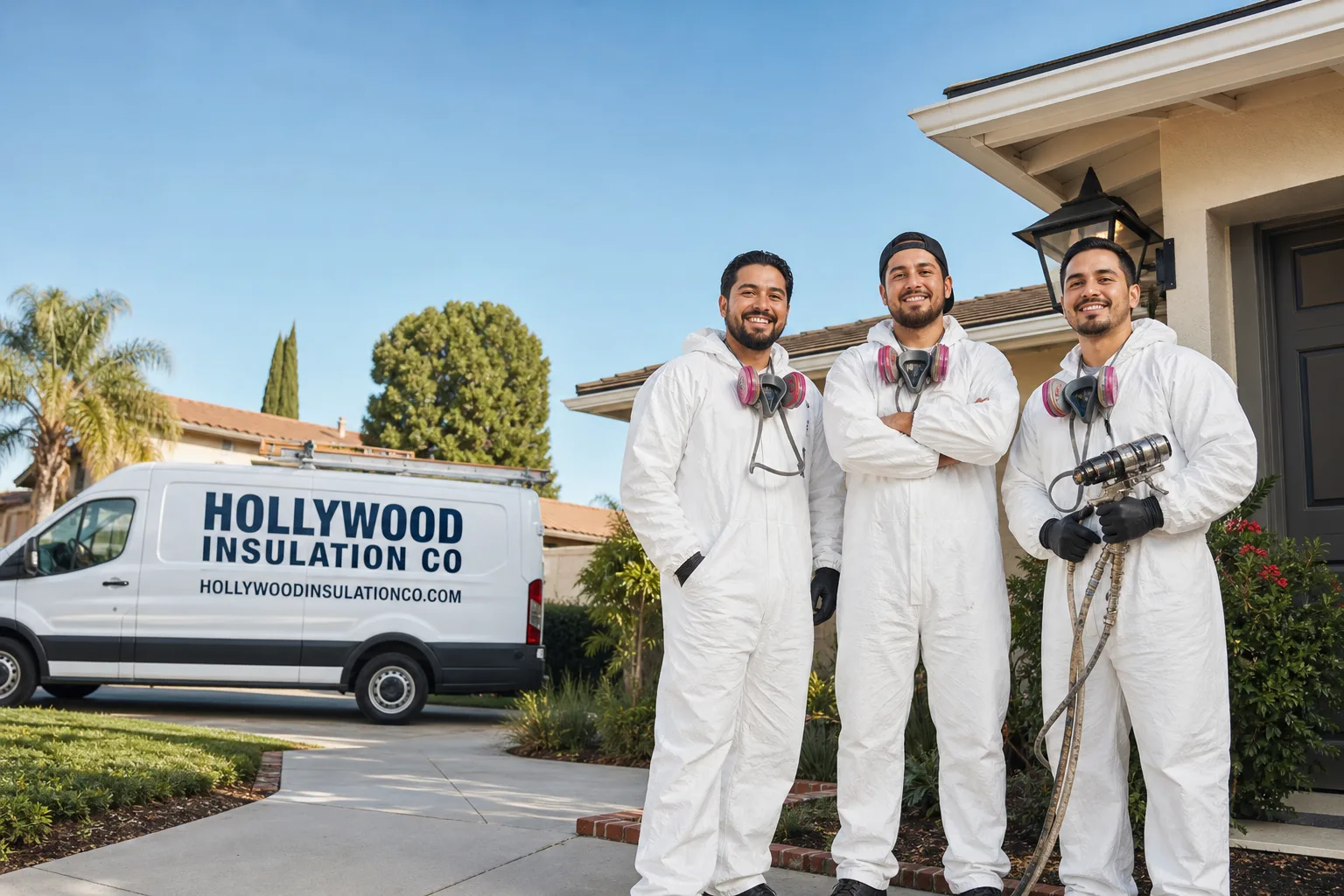
Fast, Reliable Attic Insulation Across Crestline
Attic insulation in Crestline runs $1,800 – $5,400 for a typical retrofit, with blown-in cellulose or fiberglass on the lower end and premium spray foam at the top. Most Crestline homes we see need the work because they were built as summer cabins decades ago and never upgraded for year-round mountain living. We work throughout the 92325 zip code, from the Lake Gregory shoreline up to the ridgelines off Highway 138, and we know exactly what altitude does to insulation performance. Call (866) 605-6949 for a free estimate, and we’ll tell you honestly whether you need a top-up or a full rework.
Why Hollywood Insulation Co Is Crestline’s Preferred Attic Insulation Company
Crestline homeowners keep calling us because we diagnose the actual problem before touching the material. A lot of the calls we field are for ceiling stains and cold drafts, and the root cause usually lives in the attic: missing baffles, blocked soffit vents, or batts that were shoved in over old wiring and left gaps at the ridge. We carry eight manufacturer lines, so the fix isn’t whatever fits the contract, it’s what fits the house. Noel Camacho runs every project with the same expectation: the attic should work as a system, not just hold insulation. That approach matters when the house is a 1960s A-frame off Lake Drive or a mid-century ranch near the post office on Zurich Drive.
Our Attic Insulation team has seen enough Crestline attics to know the failure patterns before we climb the ladder. We’ve worked on cabins where the original insulation was little more than thin batting pressed between exposed rafters, and we’ve worked on 1980s build-outs where the insulation was fine but the ventilation was choked. The mountain air does things to fasteners, decking, and insulation edges that lowland contractors never account for. That’s why we use moisture-tolerant mineral wool and properly specified vapor control wherever freeze cycles are a factor.
For homeowners in Attic Insulation in Crestline, response time matters. We schedule most Crestline estimates within a few days and typically complete attic retrofits in one to two working days depending on access and scope.
Insulation Contractors in Crestline
Insulation contractors in Crestline need to understand the difference between a mountain retrofit and a lowland job, because the failure modes are different. We check for ice damming risk, roof deck condensation, and whether the existing material was ever adequate for four-season use. A standard attic top-up in Crestline runs $1,200 – $2,800 when the existing insulation is dry and stable. A full removal and re-insulation, which we see often in older cabins with rodent damage or water staining, runs $3,500 – $6,000 depending on square footage and access.
Cabin-Specific Retrofit Work
Older Crestline cabins often have shallow rafter bays and no soffit ventilation. That means we’re not just adding material, we’re creating an air path first. Baffle installation and air sealing run an additional $600 – $1,400 on most cabins here.
Second-Home and Rental Upgrades
Many Crestline structures are seasonal homes, so insulation condition swings wildly. We inspect before quoting, and we’ll tell you if the existing material only needs a targeted top-up rather than a full tear-out.
Attic Ventilation in Crestline
Attic ventilation in Crestline is not a nice-to-have, it’s the difference between a dry attic and a recurring ceiling stain. At 4,500 feet, warm interior air leaks into the attic through unsealed penetrations, hits the cold roof deck, and condenses. During snowmelt and refreeze cycles, that moisture refreezes along the eaves and pushes water back under the shingles. Proper ventilation, balanced soffit-to-ridge airflow, keeps the roof deck cold enough to avoid the melt-refreeze that causes ice damming. Ventilation work on a Crestline attic typically runs $900 – $2,200 including new baffles, soffit vent retrofits, and sealing.
Ice Dam Prevention Retrofits
We add or replace baffles at the eaves and ensure ridge or gable venting matches the attic’s cubic footage. On cabins with exposed rafter tails, this often means working around old framing carefully rather than forcing modern vent systems into spaces they weren’t designed for.
Moisture-Driven Fastener Corrosion
Mountain air is dry, but trapped attic moisture creates its own microclimate. We regularly find corroded nails, rusted box vents, and stained decking in Crestline attics that never had a proper air path. Fixing the ventilation stops the damage from continuing.
Trusted Brands We Service in Crestline
We install and service insulation from Rockwool, CertainTeed, Icynene, and Demilec in Crestline attics, and we also provide Reflectix service in Crestline. Rockwool mineral wool is a strong match for mountain cabins because it handles moisture without losing R-value and won’t support mold. CertainTeed fiberglass gives us a proven batt option for standard rafter and joist cavities. Icynene open-cell foam brings air sealing into one step, which matters when you’re dealing with the irregular framing in older Crestline builds. Because we stock common material sizes locally, we can often start Crestline work within days of the estimate rather than waiting on a special order.
Common Attic Insulation Problems We See in Crestline Homes
- Legacy mineral-wool batts over exposed cabin framing: Many older cabins have thin batts stuffed between rafters with gaps at the ridge and eaves. These bare spots become thermal bridges and drive ice damming during freeze cycles.
- Zero or near-zero insulation from original construction: Cabins built as summer second homes often got little more than a layer of reflective foil or nothing at all. When used as year-round residences now, heating demand is brutal and ceilings stay cold.
- Blocked or missing soffit vents: Decades of pine needles, rodent debris, and painter’s overspray seal off the intake path. Without intake air, exhaust vents pull from the living space, dragging moisture into the attic.
- Uneven retrofits from previous handyman work: We see batts laid in random directions, vapor barriers facing the wrong way, and insulation packed around old knob-and-tube wiring. These need correction before any top-up makes sense.
Pricing for Attic Insulation in Crestline, CA
Here’s what Crestline homeowners can expect to pay in 2026. A blown-in cellulose or fiberglass top-up over existing insulation runs $1,200 – $2,800 for a typical 1,000 to 1,500-square-foot attic. Full attic insulation replacement, including removal of old material, air sealing, and new R-38 to R-49 coverage, runs $3,800 – $6,400. Attic baffle and ventilation prep adds $600 – $1,400 on most mountain cabins. Icynene open-cell spray foam on the attic floor or roofline runs $4,500 – $8,000 depending on depth and surface prep. Rockwool batts run $2,900 – $5,200 for a full attic. We give written, line-item quotes before any work starts, and every estimate is free. Call (866) 605-6949 to schedule yours.
We Also Serve Cities Near Crestline
We work across the San Bernardino Mountains and the Inland Empire foothills. In addition to Crestline, our teams regularly serve Crestline neighbors in Lake Arrowhead, Muscoy, San Bernardino, and Highland. If you’re in a nearby mountain community and need attic insulation evaluated before the next snow season, call us.
Serving Crestline, CA — Our Local Coverage Area
We’re based in the Crestline area and know this community well. Use the map below to see our service coverage — if you’re nearby, we can almost certainly help.
FAQs About Attic Insulation in Crestline
Ceiling stains in winter almost always point to attic air leakage and inadequate ventilation, not missing insulation alone. Warm interior air rises through unsealed gaps around light fixtures, plumbing penetrations, and interior wall tops, then condenses against the cold roof deck. At Crestline’s 4,500-foot elevation, that condensation refreezes during cold snaps and melts during afternoon sun, causing water to pool and stain. We fix it by air-sealing the attic floor, adding baffles, and ensuring balanced soffit-to-ridge airflow. Call (866) 605-6949 for an inspection, and we’ll pinpoint the exact leak path.
Most do not. Cabins built as summer vacation homes often received minimal or no attic insulation, and retrofits over the decades were frequently patchwork jobs with gaps at the eaves and ridge. We regularly find R-11 or less in attics that need R-38 or higher for year-round mountain use. An inspection will tell you within minutes whether your cabin is under-insulated or just unevenly insulated.
Yes. Ice damming is one of the most common winter problems we see in Crestline attics. Snow accumulates on the roof, warm attic air melts the bottom layer, and the meltwater refreezes at the colder eaves, backing water up under shingles. The fix is a colder roof deck, which means better attic insulation and proper ventilation, not a heated cable bandage. Call (866) 605-6949 if you see icicles forming at the eaves or water staining on interior ceilings.
Rockwool mineral wool and CertainTeed fiberglass both work well in Crestline, but for different reasons. Rockwool handles moisture better and maintains R-value even after minor roof leaks or condensation events, which matters when freeze cycles are common. CertainTeed fiberglass is cost-effective for deep cavity fill. Icynene open-cell spray foam gives us air sealing plus insulation in one step, which is useful for irregular cabin framing. We’ll recommend based on your attic’s condition, not a brand preference.
Yes, and in most Crestline cabins it’s required to prevent the moisture problems we described. Adding insulation without fixing ventilation can make ice damming worse by trapping more heat in the attic. We install baffles at the eaves, add or upgrade soffit vents, and verify the exhaust path at the ridge or gable ends. Ventilation work adds $600 – $1,400 to a typical attic project here. Call (866) 605-6949 for a combined assessment.
We were called to a mid-century vacation cabin off the Lake Gregory area where the homeowner found water staining on the ceiling after a cold snap. Our crew found a thin, unevenly retrofitted batt job over exposed framing with almost no ventilation path, so warm air was condensing and refreezing against the roof deck. We air-sealed the attic floor, brought in Rockwool batts and rebalanced the attic ventilation, and the staining and cold-draft complaints stopped.
Get Your Crestline Attic Evaluated Before the Next Freeze
Whether you’re living in the mountains full-time or closing up a second home for winter, a poorly insulated attic costs you money and eventually damages the roof. We’ve worked enough Crestline attics to know what the altitude does to insulation and what your cabin actually needs. Call (866) 605-6949 today for a free, no-pressure estimate. We’ll inspect, explain what we find in plain terms, and give you a written quote that covers exactly what your attic needs, nothing it doesn’t.
Written by Noel Camacho, Owner at Hollywood Insulation Co, serving Crestline and the San Bernardino Mountains.