
Why Lomita Attics Fail From Moisture, Not Just Heat
Most attic insulation in Lomita fails because of damp air, not old age. The marine layer that rolls off the Palos Verdes bluffs pushes moisture into attics from late spring through early fall, and that moisture settles directly into fiberglass batts, mineral wool, and cellulose. The result is insulation that reads R-7 or less on a thermal scan, dark condensation stains on roof sheathing, and a musty smell that drifts down into hallways and bedrooms even when the house never feels hot. That’s the Lomita signature failure mode: a moisture-first problem that standard R-value upgrades never address.
We’re attic insulation specialists, and we work in Lomita every week. Before we recommend any material, we moisture-test the existing insulation and the roof deck. If there’s condensation, adding new insulation on top just traps the damp against the framing. The fix has to start with air sealing and ventilation, then the insulation. That’s the difference between a job that lasts 20 years and one that smells again in two.
If you’re in a 1940s or 1950s bungalow near Lomita Park, Narbonne Avenue, or anywhere in the 90717 zip code, call us at (866) 605-6949. We’ll come out, run a moisture check, and tell you exactly what’s happening up there, whether it’s fixable with a top-up or needs full removal. No guesswork, no pushing material the attic doesn’t need.
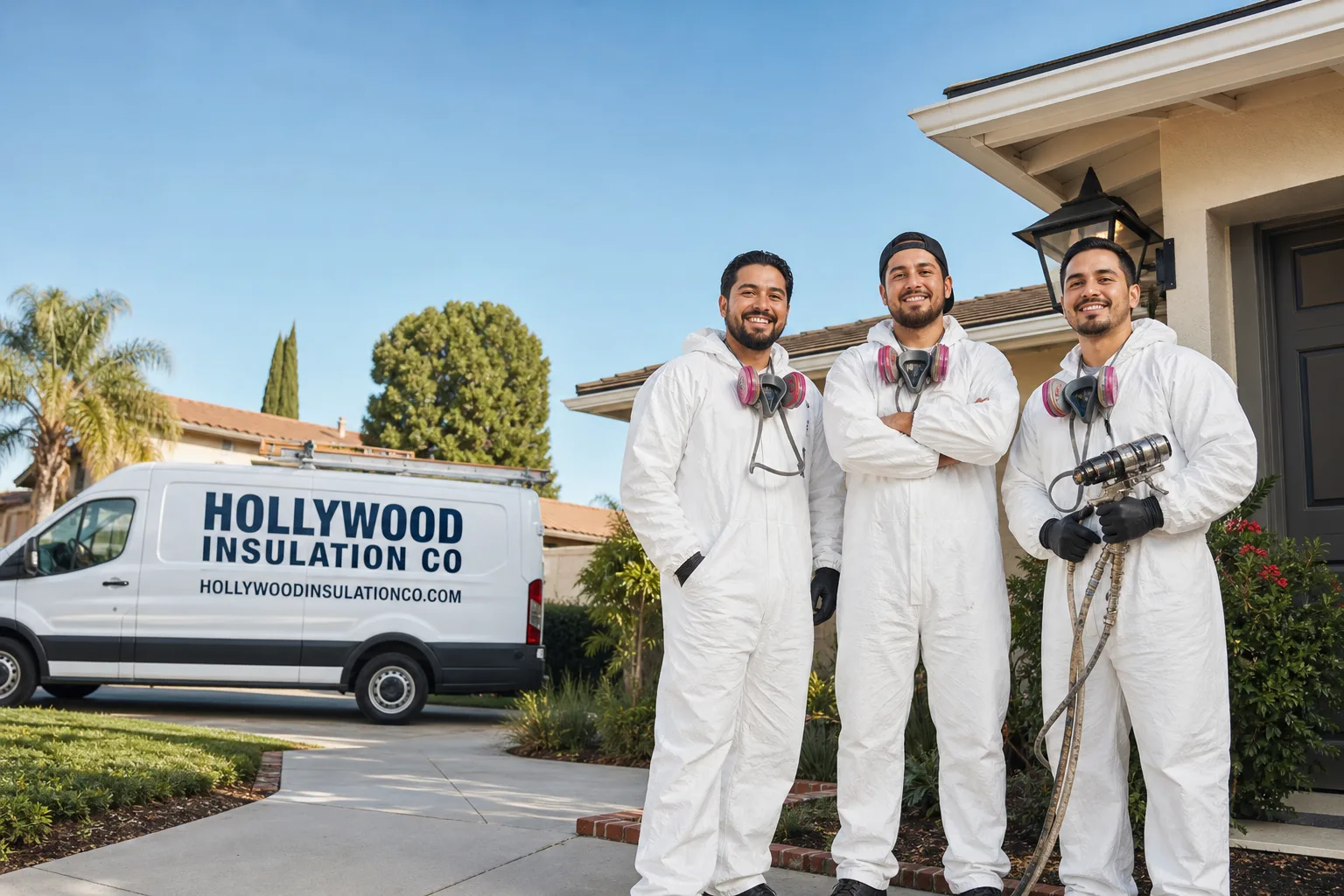
How Hollywood Insulation Co Handles Lomita’s Older Housing Stock
Lomita is a fully built-out South Bay city. There’s almost no new construction here. Every insulation job we do in Lomita is a retrofit on postwar housing, mostly single-story tract homes and bungalows built between the 1940s and 1960s. These houses share the same DNA: low-pitch roofs, original insulation that was thin to begin with, and flat-roof additions that were never vented properly. When someone calls us from Lomita, we know what we’re walking into before we arrive.
That local familiarity matters. Our crew has worked on homes along the main drags and side streets of Lomita long enough to know which neighborhoods got certain builders, and which builder put in the thinnest attic batts. When a homeowner near Eshelman Avenue tells us the front room runs five degrees warmer than the back, we don’t need to guess. We’ve seen that same floor plan a dozen times.
We’ve built our reputation in Lomita on one thing: we diagnose before we install. Thermal scans, moisture meters, and a walkthrough of the attic. Then a recommendation based on what the house actually needs. Homeowners and remodelers in Lomita call us because they want a specialist who carries eight manufacturer brands and three installation methods, not a general contractor who subs out insulation work to whoever’s available.
Noel Camacho runs our operations, and the standard he sets is simple: match the material to the house, not to the truck. That’s why a 1950s Lomita bungalow with marine-layer condensation gets a different recommendation than a newer addition with high ceilings. It’s also why Attic Insulation in Lomita work with us tends to get done right the first time.
Key Takeaways for Lomita Homeowners
- Moisture testing comes first. The marine layer off the Palos Verdes bluffs means Lomita attics need a condensation check before any new material goes in.
- Original 1940s – 60s insulation is usually done. Compressed to R-7 or less, darkened with moisture, and barely functional.
- Flat-roof additions are a common failure point. They trap damp air and develop mold on the roof deck before anyone notices insulation performance dropping.
- We carry three installation methods. Blown-in, batt, and spray foam. The house dictates which one fits.
- Free estimates by phone. Call (866) 605-6949 and we’ll schedule a walkthrough.
Attic Ventilation in Lomita
Attic ventilation in Lomita is the correction most older homes need before insulation can do its job. Because the marine layer pushes damp air into attics on a near-daily basis through spring and summer, a Lomita attic without proper soffit-to-ridge airflow will condense that moisture onto roof sheathing, rafters, and whatever insulation is up there. Ventilation is what moves that damp air out instead of letting it settle.
A typical attic ventilation job in Lomita runs $450 – $900 for adding soffit vents, vent chutes, and ridge or gable venting on a standard 900 – 1,200 square foot attic. If the roof is low-pitch or a flat-roof addition is involved, the cost rises because the venting path is more complicated. When we combine ventilation with an insulation install, the per-item cost drops since we’re already working in the space.
You need attic ventilation work in Lomita when you see condensation stains on the roof deck, when the attic smells musty in the morning, or when the existing insulation is damp to the touch even though it hasn’t rained. Ignoring it means any new insulation we install will absorb the same moisture and fail the same way.
Soffit Vent Installation
Older Lomita homes often have blocked or missing soffit vents. Stucco and siding work over the decades covers them, paint seals them, or they were never installed in the first place. We cut and install vent chutes at each soffit bay so intake air can enter low and exit high at the ridge. That’s the airflow path that keeps the marine layer moving out instead of pooling.
Ridge Vent Retrofit
Many 1950s Lomita bungalows were built with gable vents only, which don’t create enough airflow for coastal damp. We retrofit ridge vents along the peak so the entire attic breathes evenly. On low-pitch roofs this has to be done carefully to avoid leaks, and we use the right flashing details for South Bay weather.
Radiant Barrier in Lomita
Radiant barrier in Lomita is a case-by-case decision, not a default recommendation. In hot inland climates, radiant barrier reflects solar heat off the roof deck and drops attic temperatures dramatically. On the coast, the marine layer changes the math. Lomita summers are mild, and the bigger problem is moisture, not heat gain. But older Lomita homes with dark composition shingles and poorly insulated attics still get afternoon heat buildup, and in those cases a perforated radiant barrier stapled to the rafters makes a measurable difference in evening cool-down.
Radiant barrier installation in Lomita runs $600 – $1,200 for a typical 1,000 square foot attic, depending on roof pitch and whether we’re working around existing ductwork or storage. It’s most effective when paired with proper ventilation and fresh insulation. We don’t sell it as a standalone fix because it doesn’t address the moisture issue that defines Lomita attics.
We recommend radiant barrier for Lomita homes where the roof faces direct afternoon sun with minimal tree cover, or where a second-story addition makes upstairs rooms run noticeably warmer than downstairs. For a shaded bungalow near Lomita Park, the money is usually better spent on moisture-resistant insulation and ventilation.
Perforated vs. Solid Radiant Barrier
In Lomita we use perforated radiant barrier because it allows moisture to pass through instead of trapping it against the roof deck. Solid radiant barrier can create a condensation trap in coastal air, which is the opposite of what a Lomita attic needs. The perforated product reflects heat while still letting the marine layer move out through the vent path.
When Radiant Barrier Makes Sense
We suggest radiant barrier to Lomita homeowners whose attics hit 120 degrees or more on summer afternoons despite decent ventilation. If the attic stays below that, the heat gain isn’t the driver, and the money goes further with better insulation. Every house is different, so we check the attic temperature before making the call.
Trusted Brands We Service in Lomita
We install products from eight manufacturer brands across fiberglass, mineral wool, spray foam, and cellulose, and Lomita jobs typically draw from three or four of them depending on what the attic needs. For moisture-prone Lomita attics we lean on GreenFiber cellulose, which handles coastal damp better than paper-faced fiberglass. Rockwool mineral wool comes in for homeowners who want fire resistance and sound control along with thermal performance. On spray foam jobs we run Icynene and Demilec systems, both open-cell and closed-cell. We also stock CertainTeed batts and blowing wool for standard top-up work. Carrying this many brands means we’re never forcing one material onto every Lomita house because it’s the only thing on the truck.
Common Attic Insulation Problems We See in Lomita Homes
- Original 1940s – 60s batts compressed to nothing. The mineral wool or fiberglass installed when these Lomita tract homes were built is now 60 to 80 years old, compressed to R-7 or less, and often dark with trapped moisture from decades of marine layer condensation. It doesn’t insulate and it holds damp against the framing.
- Condensation stains on roof sheathing. When warm interior air leaks into a cool, damp attic, it condenses on the underside of the roof deck. In Lomita this shows up as dark staining on the plywood and a persistent musty smell in the hallway below, even when the house never feels hot.
- Flat-roof additions with no venting path. Lomita is full of postwar bungalows with flat-roof additions tacked on decades ago. Those cavities trap damp air, develop mold on the roof deck before the insulation ever fails thermally, and send condensation stains onto the ceiling below.
- Knob-and-tube-era wall cavities left uninsulated or stuffed with paper-faced batts. Some Lomita homes built before the mid-1950s still have knob-and-tube wiring in the walls. The cavities were either never insulated or later stuffed with paper-faced batts that wick moisture and settle, leaving upper corners cold and damp. This needs careful handling, and we check for wiring before we blow anything into a wall.
Pricing for Attic Insulation in Lomita, CA
Lomita attic insulation jobs run a wide range because the housing stock varies from small postwar bungalows to larger homes with additions and flat-roof sections.
- Attic insulation top-up (blown-in cellulose or fiberglass over existing insulation): $1,100 – $1,800 for a typical 1,000 – 1,200 square foot attic.
- Full attic insulation replacement (remove old, air-seal top plates, blow in new material): $2,800 – $4,500 depending on attic size and access.
- Attic batt insulation (new install or replacement with Rockwool or CertainTeed batts): $1,800 – $3,200 for a standard Lomita attic.
- Attic ventilation prep (soffit vent chutes, baffles, ridge or gable venting): $450 – $900 standalone; less when bundled with insulation.
- Radiant barrier installation (perforated, stapled to rafters): $600 – $1,200 for a typical attic.
- Spray foam insulation (Icynene or Demilec, open-cell or closed-cell): $2,200 – $4,800 depending on roof deck coverage and foam type.
Moisture testing and a thermal scan are free with any attic estimate. Call (866) 605-6949 and we’ll give you an exact number for your attic, not a website range.
What We Found in a 1950s Bungalow Near Lomita Park
On a 1950s bungalow near Lomita Park, our crew found the original mineral wool batts compressed to R-7 and dark with condensation stains on the roof sheathing. The homeowner had called about a musty smell in the hallway, not about insulation performance. After air-sealing the top plates, we blew in GreenFiber cellulose to R-38 and installed an Owens Corning vent chute at each soffit to keep the marine layer moving out. The homeowner called back two weeks later. The musty smell was gone, and the back bedroom finally cooled down by evening. That’s the Lomita job in one story: moisture first, insulation second, and the smell was never about the insulation at all.
We Also Serve Cities Near Lomita
Our crews work across the South Bay and the areas bordering Lomita, including Torrance, Rolling Hills Estates, West Carson, and Manhattan Beach. If you’re in one of those cities and need attic insulation, ventilation, or a moisture assessment, call the same number: (866) 605-6949. We schedule by neighborhood, so response times stay tight across the region.
Serving Lomita, CA — Our Local Coverage Area
We’re based in the Lomita area and know this community well. Use the map below to see our service coverage — if you’re nearby, we can almost certainly help.
FAQs About Attic Insulation in Lomita
Yes, and in Lomita the musty smell is usually the first sign that your insulation has absorbed years of marine-layer moisture. Damp insulation reads far below its labeled R-value and holds condensation against the roof deck and framing. We’ll moisture-test the existing material and the sheathing before recommending removal or a top-up. If the insulation is damp, it has to come out. Call (866) 605-6949 for a free inspection.
We can insulate the attic, but wall cavities with knob-and-tube require an electrical check before anything goes in. Blowing insulation over live knob-and-tube is a fire hazard and against code in most cases. We’ll bring in an electrician’s assessment if needed, and we won’t blow material into a wall that isn’t safe. Attic work is usually unaffected, and that’s where the biggest heat loss happens anyway.
Flat-roof additions on older Lomita homes were built without a vent path between the ceiling and the roof deck. Damp air from the house rises into the cavity, meets the cooler roof surface, and condenses. The stains on your ceiling are water that condensed, dripped back down, and soaked into the drywall. The fix involves venting or sealing that cavity, and in some cases a closed-cell spray foam application from Icynene or Demilec to stop the air movement entirely. We can assess it and tell you which route fits.
R-38 is the standard we blow to in Lomita attics. The coastal climate doesn’t demand R-60 like the desert, and the bigger issue is getting the insulation dry and keeping it that way. R-38 cellulose or fiberglass, properly air-sealed and ventilated, handles Lomita’s temperature swings and gives you lower heating and cooling costs without overpaying for material that won’t pay back.
We use it selectively. Radiant barrier helps when a Lomita attic gets direct afternoon sun and runs hot despite decent insulation and venting. For shaded bungalows or attics that stay below 120 degrees, it’s usually not the best use of the budget. We’ll take an attic temperature reading during the estimate and tell you honestly whether radiant barrier will pay off in your house. Call (866) 605-6949 to schedule.
Get Your Lomita Attic Assessed
If your attic smells, your bills are creeping up, or you’re just not sure what’s up there, call us. Hollywood Insulation Co works in Lomita every week, and we’ll come out, run a moisture check, and give you an honest read on what the attic needs. No pressure, no upselling, no material forced on the house because it’s what we happen to carry. Call (866) 605-6949 now for a free estimate, and we’ll schedule your walkthrough at a time that works for you.
Written by Noel Camacho, Owner at Hollywood Insulation Co, serving Lomita and the South Bay with attic insulation, ventilation, and moisture remediation.