
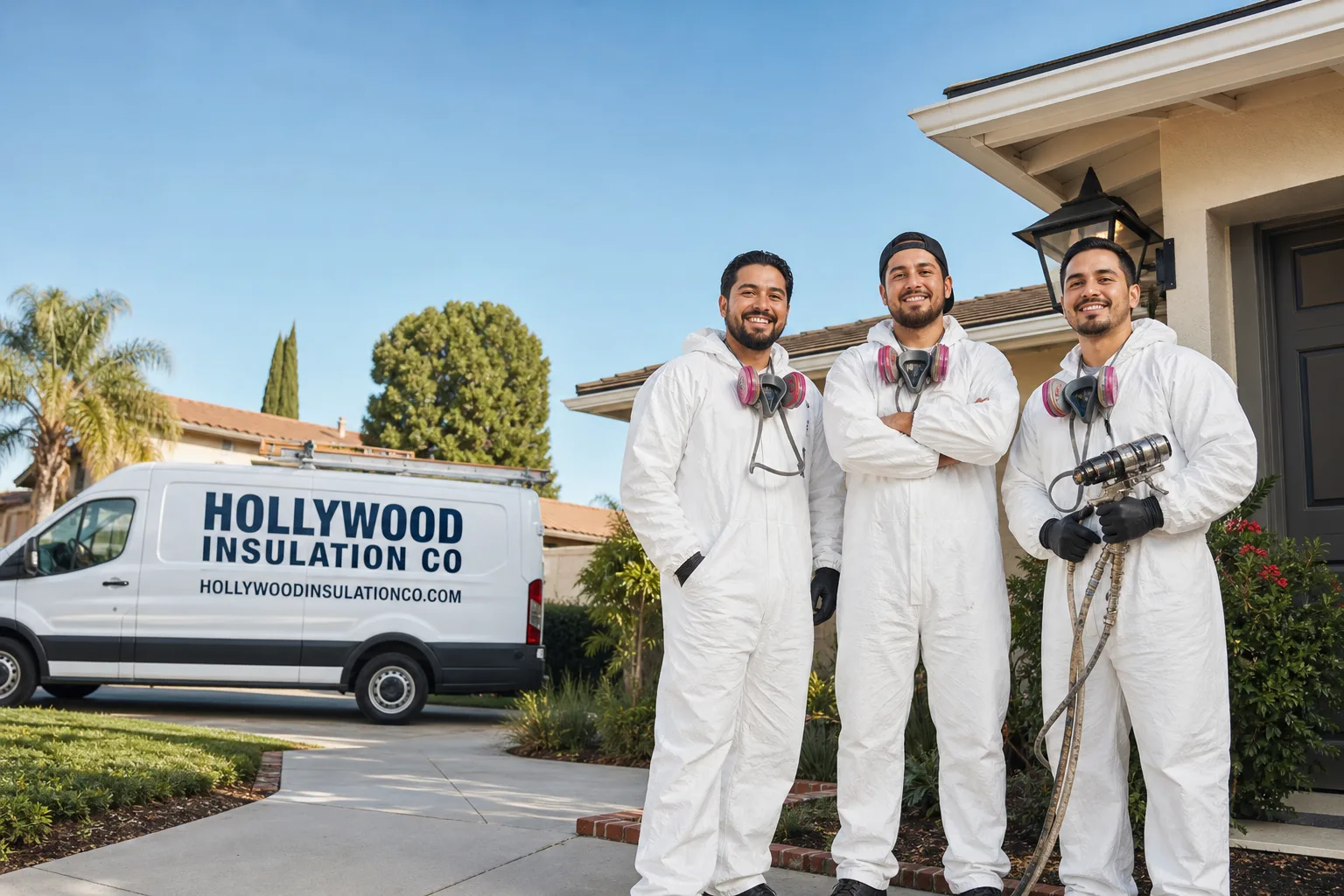
Fast, Reliable Attic Insulation Across Morongo Valley
Attic insulation in Morongo Valley is a different job than it is down the hill. The high-desert swing from 100-degree afternoons to 40-degree nights punishes under-insulated attics, and the wind that funnels through the Morongo Basin pass loads batts with fine dust until they stop doing their job. We run crews to Morongo Valley weekly from our Hollywood shop, and we know what a wind-scoured attic off Hess Boulevard or Highway 62 looks like. If your cooling bill spikes every summer or your home won’t hold heat after sundown, call us at (866) 605-6949. We’ll inspect, diagnose, and give you a straight number.
Why Hollywood Insulation Co Is Morongo Valley’s Preferred Attic Insulation Company
Morongo Valley homeowners call us because we’re insulation specialists, not a general contractor who happens to carry a few batts. Our Attic Insulation crews do this one trade every day, which means they recognize the failure patterns that are common here: dust-loaded fiberglass, compressed batts that measure a fraction of their label, and sagging coverage above manufactured-home ceilings. That diagnostic ability matters when a home has already had one retrofit that didn’t fix the problem.
Noel Camacho, our owner, has built the company around the idea that the right material and method depend on the house, not on what’s loaded in the truck. That’s why we carry products from eight manufacturer brands, including Rockwool, CertainTeed, Icynene, and Demilec, and install batt, blown-in, and spray foam systems. For Morongo Valley specifically, that breadth means we can match the fix to the failure. A wind-dust problem gets a different solution than a simple R-value deficiency.
We get to Morongo Valley fast. Most inspections are scheduled within a few days, and we batch jobs in the Basin to keep trip costs down for our desert customers. Estimates are free, and we show up with the tools to do the work in one trip whenever we can.
Attic Insulation Removal in Morongo Valley
Attic Insulation Removal is the most common starting point on Morongo Valley retrofits, and it’s a job we recommend more often here than almost anywhere else we work. The reason is the wind. Fine desert sand gets pulled into attic cavities through vents, gaps at top plates, and poorly sealed can lights. Over years, that dust settles into the fiberglass or cellulose, compressing it and cutting its effective R-value well below the label. Old batts that left the factory at R-19 can test closer to R-8 after a decade of Morongo Basin wind.
Full Vacuum Removal
We use HEPA-filtered vacuums to pull out old, dust-contaminated insulation without spreading that fine particulate through your living space. The process takes a day for most single-family homes in Morongo Valley. Once the cavity is empty, we can actually see the air leaks and thermal bypasses that were hidden under the old material.
Removal Before Air Sealing
You can’t air-seal an attic that still has old insulation in it. The top plates, wire penetrations, and plumbing chases have to be exposed. That’s why we almost always pair removal with air sealing on Morongo Valley homes. It’s a one-trip job: remove, seal, then install the new insulation to whatever R-value the house needs. On the high desert, we typically aim for R-49 to R-60 in vented attics.
Insulation Contractors in Morongo Valley
Insulation Contractors who know Morongo Valley understand that the job is about more than hitting an R-value. It’s about designing an assembly that survives the local conditions. The right contractor will look at your attic as a system: intake ventilation at the soffits, exhaust at the roof, air sealing at the ceiling plane, and insulation that doesn’t shift or settle when the wind loads up the vents.
What a Morongo Valley Contractor Checks
Before we quote any job, we walk the attic. We look for wind-blown dust accumulation along the windward side of the roof, compressed or displaced batts, sagging insulation over manufactured-home ceilings, and gaps at top plates and chases. We also check whether the existing baffles are still in place. In Morongo Valley, baffles get dislodged by pressure differences when the wind gusts hard through the pass.
Specifying the Right Material
Blown-in cellulose like GreenFiber settles less under wind vibration than loose fiberglass, and it’s denser, which helps block dust intrusion. Rockwool mineral wool batts hold their shape better than standard fiberglass when wind and dust are a factor. Closed-cell spray foam, like Icynene or Demilec systems, air-seals and insulates in a single application, which makes it a strong choice for cathedral ceilings and hard-to-vent areas on Morongo Valley homes. We’ll give you the trade-offs in plain terms, not a sales pitch.
Trusted Brands We Service in Morongo Valley
We don’t push one brand on every job. Morongo Valley homeowners get an honest recommendation from a lineup that includes Rockwool mineral wool for fire resistance and wind stability, CertainTeed fiberglass for budget-conscious batt work, and Icynene and Demilec spray foam systems for air sealing and high-R-value applications where venting isn’t practical. Because we install all three methods and carry eight manufacturer brands, the recommendation is based on your attic’s actual conditions, not what’s left on the warehouse shelf. Parts and material availability matter on desert schedules, and we keep our Morongo Valley jobs stocked so we’re not making a second trip for a missed accessory.
Common Attic Insulation Problems We See in Morongo Valley Homes
- Wind-driven dust loading. The Morongo Basin pass funnels wind through the valley for much of the year, carrying fine sand that infiltrates attic cavities and buries fiberglass batts. Loaded batts compress and lose R-value fast, which is why we recommend removal rather than topping up on most retrofits.
- Compressed and displaced batts. Original R-11 or R-19 batts from the 1950s through 1980s have often settled to a fraction of their labeled thickness on Morongo Valley job sites. Top plates end up bare, and the thermal barrier fails right where the ceiling meets the walls.
- Sagging insulation in manufactured homes. Older mobile and manufactured homes on acreage lots around Morongo Valley typically have thin roof assemblies and minimal original insulation. The ceiling insulation sags or shifts over time, leaving the home unable to hold heat through cold desert nights.
- Failed or missing baffles. Baffles keep insulation from blocking soffit vents, but Morongo Valley’s wind pressure can dislodge them or pack them with dust. Once ventilation fails, attic temperatures climb and moisture becomes a problem even in the dry desert air.
Pricing for Attic Insulation in Morongo Valley, CA
Attic insulation pricing in Morongo Valley tracks the size of the attic, the amount of existing material that has to come out, and the R-value you’re targeting. Here are honest ranges for this market, including labor and materials:
- Attic insulation removal only: $1.20 – $2.50 per square foot, depending on depth, dust load, and access.
- Blown-in attic insulation top-up (R-30 to R-49): $2,800 – $5,200 for a typical 1,200 – 1,600 sq ft attic in Morongo Valley.
- Full removal, air sealing, and blown-in insulation to R-49: $6,500 – $11,000 for most single-family homes in the 92256 area.
- Attic batt insulation replacement with Rockwool or CertainTeed: $3,900 – $7,800 depending on bay spacing and access.
- Spray foam attic installation (Icynene open-cell or Demilec closed-cell): $9,500 – $17,000 for full roof deck coverage on a typical Morongo Valley home.
Dust-heavy removals, low-clearance attics, and manufactured-home work can move the number up or down. Call (866) 605-6949 for an exact quote. Estimates are free, and we don’t charge a trip fee for Morongo Valley jobs when we’re already scheduled in the Basin.
We Also Serve Cities Near Morongo Valley
Our crews work throughout the Morongo Basin and the surrounding high desert. In addition to Attic Insulation in Morongo Valley, we serve Desert Edge, Garnet, Desert Hot Springs, and Yucca Valley. If you’re somewhere along Highway 62 or off the beaten path in the Basin, call (866) 605-6949 and we’ll let you know when our next crew is in your area.
Serving Morongo Valley, CA — Our Local Coverage Area
We’re based in the Morongo Valley area and know this community well. Use the map below to see our service coverage — if you’re nearby, we can almost certainly help.
FAQs About Attic Insulation in Morongo Valley
Morongo Valley’s consistent pass wind pulls fine desert dust into attic cavities through vents and air gaps, and that dust settles into fiberglass and cellulose insulation, compressing it over time. Wind pressure also dislodges baffles and can shift poorly secured batts. The result is an attic that tests well below its labeled R-value, even if it was installed correctly. The fix is removal of the dust-loaded material, air sealing, and re-insulating with a material that resists wind disturbance, like dense-packed cellulose, Rockwool batts, or spray foam. Call (866) 605-6949 and we’ll inspect your attic with this specific failure mode in mind.
Removal is common here because most older Morongo Valley homes have original insulation that’s been wind-loaded with dust for decades, and topping up over contaminated material just buries the problem deeper. You can’t air-seal properly through old batts, and you can’t restore R-value to fiberglass that’s been compressed to half its original thickness. On a 1970s site-built home off Hess Boulevard, we found original R-11 batts compressed to less than 2 inches and coated in fine sand. A straightforward top-up would have failed. The one-trip removal, air-seal, and re-insulate approach is the only fix that actually holds up in this climate.
For a vented attic in Morongo Valley, we recommend R-49 minimum, and R-60 for homes that run cooling most of the summer or heating most of the winter. The high-desert diurnal swing, where daytime highs push 100-plus and nights drop into the 40s, means your attic insulation has to work in both directions around the clock. Under-insulated attics let heat load the living space all afternoon and then bleed it out after dark. Pairing that R-value with proper air sealing and baffled ventilation is what actually stabilizes indoor temperatures.
Yes. A large share of Morongo Valley’s housing stock is manufactured and mobile homes on acreage lots, and those roofs have almost no thermal mass. We work on manufactured-home attics regularly, removing old sagging insulation from the ceiling cavity, air sealing what we can access, and re-insulating to the highest R-value the cavity will allow. For homes with shallow roof assemblies, closed-cell spray foam from Icynene or Demilec can add insulation and air sealing in the same pass. Call (866) 605-6949 and tell us what kind of home you have. We’ll plan the job around it.
Start with air sealing, not just insulation. Most of the dust that ends up in Morongo Valley attics enters through gaps at top plates, wire penetrations, can lights, and loose vent connections, so sealing those paths is step one. Then we make sure baffles are installed and secured so soffit ventilation stays open without letting wind carry debris into the attic. Choosing a denser insulation material also helps. GreenFiber cellulose and Rockwool batts resist wind-driven infiltration better than loose fiberglass. And on the worst-corridor properties, we’ll discuss spray foam as a full air-barrier solution. It’s a more involved install, but it’s the most dust-resistant assembly we can put in an attic in the Morongo Basin.
If your attic isn’t holding up to Morongo Valley’s wind and temperature swings, don’t wait through another season of high bills. Call Hollywood Insulation Co at (866) 605-6949 for a free inspection and a straight-written estimate. We’ll tell you what’s actually wrong up there, and what it takes to fix it right.
Written by Noel Camacho, Owner at Hollywood Insulation Co.