Fast, Reliable Attic Insulation Across Burbank
Attic insulation in Burbank typically runs $1,800 – $4,200 for a full retrofit on a 1,000 – 1,500 sq ft bungalow, with most jobs completed in a single day. Our crews know Burbank’s streets, Burbank’s housing stock, and Burbank’s summer heat. When we get a call from the 91505 or 91506 flats, we know the home before we’ve even seen it: low-pitch roof, original stucco, maybe a flat-roof addition off the back, and an attic that’s been cooking the upstairs bedrooms since June. Call (866) 605-6949 for a free estimate, and we’ll have a specialist at your door within 24 hours, not in the morning when the heat’s already climbing and you’ve spent another night tossing.
Why Hollywood Insulation Co Is Burbank’s Preferred Attic Insulation Company
The difference between a general contractor who will “take a look at your insulation” and a dedicated attic insulation specialist shows up the moment the work starts. Hollywood Insulation Co does one trade, every day. That means our technicians know what they’re looking at when they open a hatch in a 1948 bungalow off Chandler and find something that hasn’t been touched since the Truman administration. Our reputation in Burbank has been built one hot upstairs bedroom at a time. Our customers call us back because the diagnosis matched the fix, not because we upsold them a spray foam package they didn’t need.
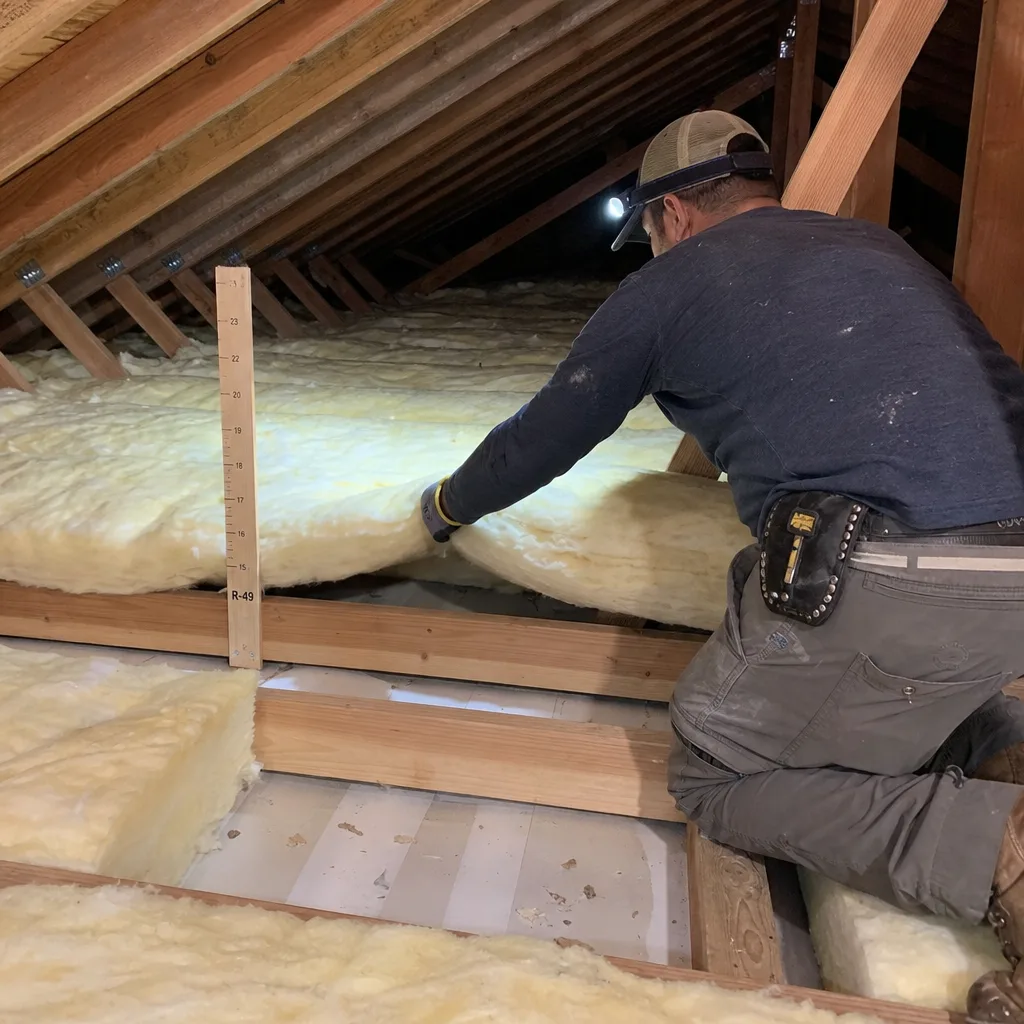
Noel Camacho leads every project with a simple principle: the home decides the material, not the truck. We’re not a one-brand shop. We install Icynene and Demilec spray foam systems, Owens Corning and GreenFiber blow-in options, and Rockwool mineral wool batts. Eight manufacturer brands, three installation methods, one honest recommendation. For a 1950s bungalow near Magnolia with no attic hatch, that might mean blowing GreenFiber to R-38 through a gable vent. For a hillside home in 91501 with a low-pitch roof, it might mean a radiant barrier under the sheathing plus an air-seal. That specificity is why Burbank homeowners and the remodelers working on Burbank’s older housing stock keep calling us back.
Our response time to Burbank is same-day for emergencies and within 24 hours for free estimates. When a homeowner in the Magnolia Park area calls about a 95°F upstairs bedroom in October, we don’t schedule them out three weeks. We get there, we look at the attic, we tell them what’s really going on, and we quote the work. No pressure. The city’s tight streets and alley-load garages mean we send our crews in service vehicles that can park in Burbank’s residential zones without needing a CDL. We’ve also worked with Burbank contractors on larger remodels, so we know the city’s permit office and what inspectors look for when they walk a post-war single-story.
Radiant Barrier in Burbank
Radiant Barrier in Burbank is often the single highest-impact upgrade you can make on a 1950s home, because it directly attacks the problem that makes Burbank attics miserable: radiant heat gain through the roof deck. On a 102°F afternoon in the 91505 flats, a standard composition shingle roof can push attic air past 150°F. That heat doesn’t need to go anywhere; it radiates straight down through the ceiling. A radiant barrier reflects that heat before it ever enters the attic, which means the insulation below it actually does its job. For Burbank’s dense single-story housing stock, where low-pitch and flat-roof sections leave very little attic air space, this matters more than any single R-value upgrade. In our experience, a radiant barrier alone can drop an upstairs bedroom 8 – 12°F on a hot summer day, before you add a single batt. The cost for a radiant barrier installation in Burbank typically runs $1.50 – $3.00 per sq ft of attic floor area, or $1,200 – $2,800 for a typical 1,200 sq ft home.
Where Radiant Barrier Goes In Low-Pitch Attics
On Burbank’s classic low-pitch roofs, especially the post-war bungalows near the Verdugo foothills, we typically install radiant barrier as a staple-up layer under the rafters rather than on the attic floor. A floor-mounted barrier in a low attic collects dust and stops reflecting. A stapled overhead barrier stays clean and works. For homes with flat-roof additions off Magnolia or Olive, we often pair the barrier installation on the original house section with blown-in insulation in the addition, because the two roof types have completely different heat profiles.
Radiant Barrier vs. More Insulation
A lot of Burbank homeowners think the answer to a hot upstairs is “more R-value.” It’s not always. Once the attic air is 150°F, adding R-30 to R-50 doesn’t change the physics much, the heat is still radiating down. The problem is the roof deck’s temperature, not the insulation’s thickness. The right fix on a low-pitch 91501 home is often a radiant barrier plus air-sealing, with insulation as the third element. We’ve seen homes drop 10 degrees upstairs after a barrier went in, with the same old batts still in place. That’s not a sales pitch, that’s how heat transfer works.
Attic Cleaning Services in Burbank
Attic Cleaning Services in Burbank matter more here than in a tract-home suburb, because Burbank’s older housing stock tends to come with attics that haven’t been opened in 30 years. Homes built for Lockheed and movie-industry workers in the 1940s and 1950s were not designed with modern attic access or ventilation. By the time we get to them, there’s usually a layer of fine Valley dust, old rodent activity, broken vent screens, and in some cases insulation that’s compressed to half its original R-value. Cleaning the attic before insulating is not a courtesy step; it’s a functional requirement. If you blow new GreenFiber or Owens Corning loose fill over a thick layer of dust and old debris, the new material can’t settle evenly, and you’re insulating the dirt, not the ceiling. A full attic cleaning in Burbank typically runs $400 – $900 depending on attic size and debris condition, and it’s usually done the same day as the insulation work.
What Attic Cleaning Covers
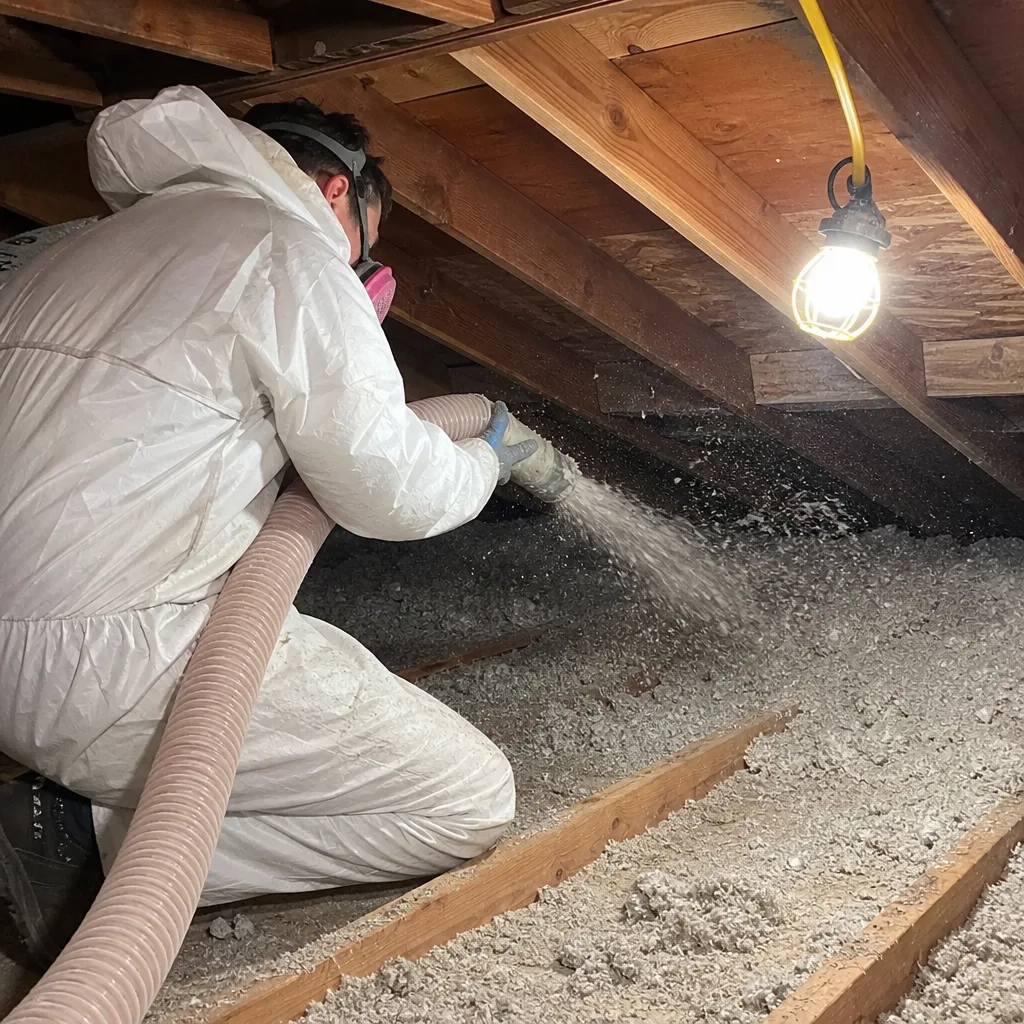
We remove old, compromised insulation if it’s present, vacuum or sweep out the accumulated dust and debris, inspect for rodent or pest activity, and check the vent screens. In Burbank’s 1920s and 1930s bungalows, we also check for original wiring that can’t be safely covered. The cleaning step is when we find problems: a cracked rafter, a failed gable vent, an old knob-and-tube run that needs to be addressed before any loose fill goes in.
When Cleanup Needs To Happen Before Insulation
If your attic has seen rodents, the droppings and urine need to come out before anything goes in on top. If you’ve had a roof leak that’s been patched but left stained decking, that area needs to dry and get checked for mold before insulation touches it. And if you’re in a Burbank bungalow that’s been lived in for decades without ever having the attic opened, the cleanup is the honest first step, not an add-on we invented to pad the quote.
What happens when you call
- 1
A real person answersNo phone trees — you reach a local pro.
- 2
You get an upfront price rangeHonest numbers before anyone is dispatched.
- 3
A background-checked tech heads outLicensed & insured, dispatched right away.
- 4
You approve before work beginsNothing starts until you say go.
Trusted Brands We Service in Burbank
Hollywood Insulation Co installs products from eight recognized manufacturer brands across fiberglass, mineral wool, spray foam, and cellulose. For Burbank customers specifically, we keep stock of Icynene open-cell and closed-cell foam, Demilec spray foam systems, GreenFiber recycled cellulose, and Owens Corning fiberglass. When someone calls us from the 91505 flats about a hot upstairs bedroom, the conversation is “which of these does your attic actually need,” not “here’s what we have on the truck.” That flexibility means we quote the method that fits the roof pitch and the access, and we can usually start within a week of the estimate. For Burbank remodelers and builders, the same portfolio means we can specify insulation that matches the energy code and the client’s budget on a single call. One contractor, one point of contact, no sub-trades. That’s what makes Burbank’s local pros call us instead of the big-box installers.
Common Attic Insulation Problems We See in Burbank Homes
- R-0 attics in original 1940s-1950s bungalows. Burbank’s aircraft-worker boom housing was built before energy codes existed, and we’ve opened attics near Chandler and Buena Vista that had nothing between the ceiling and the roof deck but a layer of 70-year-old dust. The homes look well-kept from the street, but the attic tells a different story.
- Flat-roof additions with zero attic access. Off Magnolia and Olive especially, the common Burbank flat-roof addition often hides an unvented, uninsulated void that makes the back bedrooms swelter from May through October. The fix is often blowing insulation in through a gable vent or cutting a new hatch on the rear slope, because the original builder never provided an opening.
- Original knob-and-tube wiring still live and hot. Homes built between 1920 and 1950 in the 91501 and 91504 flats sometimes still have the original cloth-wrapped wiring in the attic. Loose fill blown over active knob-and-tube is a genuine fire risk, and we flag it every time before recommending a workaround that keeps the home safe and insurable.
- Low-pitch roofs that trap radiant heat. The low-slope roofs common across Burbank’s Spanish-style and bungalow housing stock create shallow attics where air doesn’t circulate. The result is a pocket of 150°F+ air sitting directly on top of the ceiling. Adding batts alone won’t fix it; the roof deck needs a radiant barrier or a different material approach entirely.
Pricing for Attic Insulation in Burbank, CA
Here’s what we’re seeing for Burbank attics as of this writing. A blown-in GreenFiber or Owens Corning cellulose job typically runs $1,800 – $3,400 for a standard 1,000 – 1,500 sq ft bungalow. Adding a radiant barrier on a low-pitch roof adds roughly $1,200 – $2,800 depending on the roof geometry. A full attic cleaning runs $400 – $900. If you need a new access hatch cut into a flat-roof addition off Magnolia, budget $300 – $600 for that separately. If the attic has original knob-and-tube wiring, factor in an electrician’s scope before we can legally and safely blow loose fill over it. We’ll walk you through the numbers at the estimate, with line items you can actually understand. Call (866) 605-6949 for a free quote, and we’ll give you numbers for your specific roof, not a national average you read online.
We Also Serve Cities Near Burbank
Our Attic Insulation team regularly works in the communities around Burbank too: Universal City, North Hollywood, Glendale, and Studio City. If you’re in one of those areas or anywhere else in the San Fernando Valley, call us at (866) 605-6949 and we’ll get a specialist out. For more on who we are and what we do, see our Attic Insulation in Burbank page.
Serving Burbank, CA — Our Local Coverage Area
We’re based in the Burbank area and know this community well. Use the map below to see our service coverage — if you’re nearby, we can almost certainly help.
FAQs About Attic Insulation in Burbank
Yes. We do this regularly in Burbank’s flat-roof additions from the 1950s and 1960s. We cut a new access hatch on the rear slope, blow the insulation to the required R-value, air-seal the top plates with closed-cell foam, and close it up. The work usually takes half a day, and we patch the roof opening properly. Call (866) 605-6949 and we’ll assess your exact roof geometry.
Because the heat isn’t coming through the insulation, it’s radiating down from a roof deck that’s been baking in the Valley sun all day. On a 102°F afternoon, the attic air can pass 150°F, and more R-value doesn’t change that radiant load. The fix is a radiant barrier on the roof deck plus air-sealing, and we can explain what that means for your specific low-pitch roof. Call (866) 605-6949 for an honest diagnosis.
No. Our crews run standard service vehicles that fit Burbank’s residential streets and alleys, including the tight one-way blocks off Magnolia and the Garry Marshall area. We don’t bring a semi or a crane for an attic job. Just let us know if there’s street sweeping on your block and we’ll plan around it.
You can insulate around it, but you cannot legally or safely blow loose fill over active knob-and-tube. Burbank inspectors will flag it, and the fire risk is real. On older 91501 and 91504 bungalows with active knob-and-tube, the right sequence is to have an electrician decommission or rewire the affected circuits, then we insulate. We’ll tell you if we see it on the estimate, and we won’t touch the job until it’s addressed. Call (866) 605-6949 to discuss your home’s electrical situation.
A 1940s Spanish-style in 91501 typically has a low-pitch roof with very shallow attic space, often with original stucco walls and little to no insulation above the ceiling. The most effective approach is usually a combination: air-seal the top plates, install a radiant barrier under the rafters, and blow GreenFiber or Owens Corning loose fill to as much R-value as the space allows. On a shallow pitch, you may not get to R-38, but sealed air plus a barrier gets you most of the comfort gain. Call (866) 605-6949 and we’ll spec it for your actual roof.
Written by Noel Camacho, Owner at Hollywood Insulation Co, serving Burbank, CA and the San Fernando Valley.