
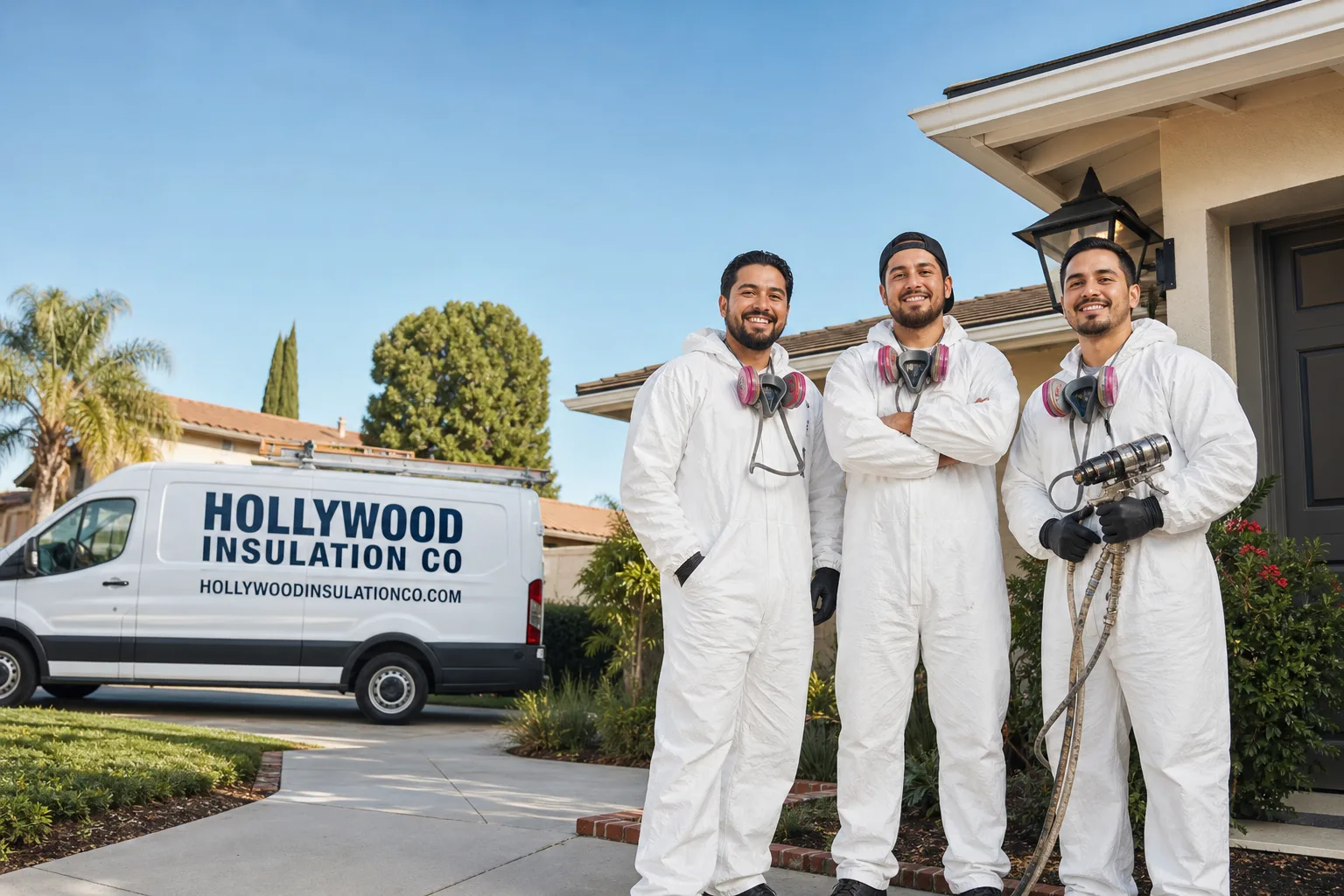
Fast, Reliable Attic Insulation Across Indio
Attic insulation in Indio usually runs $1,800 to $4,600 for a full re-cover or replacement on a typical 1,200 to 2,000-square-foot home, depending on material and attic condition. Most jobs here take one day, and we schedule Indio calls six days a week with crews familiar with every tract from the 92201 corridor to PGA West in 92203. If your cooling bills have crept up every July while your AC runs nonstop, the answer is probably above your ceiling, not inside your HVAC unit. Call us at (866) 605-6949 and we’ll tell you what’s actually going on up there.
Hollywood Insulation Co is a dedicated insulation contractor, not a general remodeler who occasionally rolls out batts. We live in this one trade, which matters in Indio because this desert does things to insulation that milder California cities never see. Sand, heat, and old housing stock combine into a specific set of problems. We know how to read them.
Why Hollywood Insulation Co Is Indio’s Preferred Attic Insulation Company
Indio homeowners call us because we diagnose before we quote. That means pulling back a hatch, looking at what’s actually under the existing batt or blown-in material, and telling you the truth about whether you need a top-up, a full replacement, or dust-sealing before anything else. Noel Camacho built this company around a simple idea: carry enough insulation methods and brands to recommend the right one for the house in front of you, not whatever’s on the truck. That’s why we install spray foam, blown-in, and batt insulation under one roof, using materials from Owens Corning, Icynene, Demilec, and GreenFiber, among others.
Response time to Indio is typically one to two business days for estimates, and we don’t treat the Coachella Valley as a far-flung jobsite. Our crews are in Indio regularly, which means if you need attic work before the next heat spike or right after a wind event, we can usually get to you fast. Homeowners in the Sun City area and the older tracts south of Highway 111 keep calling us back because we explain what we’re doing and why, and the results show up on their next SCE bill.
Insulation Contractors in Indio
Insulation contractors in Indio work on a specific kind of problem: houses built in the 1980s and 1990s with original fiberglass batts that have been cooking in 150°F attics for three decades while desert wind pushed sand through every vent gap. The job here usually involves pulling back the existing material to assess what’s recoverable, air-sealing the top plates and penetrations, then re-covering with blown-in insulation or upgrading to a higher-R-value system. A typical assessment and re-cover for an Indio home runs $2,200 to $4,600 depending on square footage and the extent of dust-loaded material that needs removal.
Blown-In Attic Insulation
In Indio’s older tracts, blown-in insulation is often the smartest method because it fills around existing framing and ductwork evenly. GreenFiber cellulose, which we carry, settles into a dense thermal blanket that resists the dust-loading problem better than loose fiberglass. A full blown-in re-cover over degraded batts for a 1,500-square-foot Indio attic typically lands between $2,200 and $3,800.
Attic Batt Insulation
Some Indio attics do better with fresh batts, especially where the ceiling joist spacing is standard and there’s minimal existing material to remove. Owens Corning and CertainTeed batt products we install carry clear R-value labeling, so you know exactly what’s going in. In Indio’s stucco-on-slab tract homes, we typically recommend batt replacement only when the existing material is completely compromised and the attic is accessible enough to get full coverage. Expect $1,800 to $3,400 for a typical batt replacement.
Attic Ventilation in Indio
Attic ventilation in Indio is not optional add-on work, it’s half the insulation equation. When a 150°F attic can’t exhaust that heat, the insulation you just paid for has to fight a losing battle. In Indio’s climate, a well-ventilated attic can sit 30 to 40 degrees cooler than a sealed, stagnant one, which directly reduces the heat load pushing down into your living space. Ventilation work for a standard Indio attic runs $950 to $2,100 depending on whether you need additional soffit vents, ridge venting, or a powered attic fan. We recommend pairing any insulation upgrade with a ventilation assessment, because spending $3,000 on new insulation without fixing airflow is like buying new tires for a car with bad alignment.
Baffles and Ridge Vent Prep
In most Indio homes, the original baffles either don’t exist or were never installed correctly. Baffles keep blown-in insulation from blocking the soffit vents, which is the number one reason old attics stop breathing. Our crews install baffles before blowing in any new material. For homes with existing ridge vents that are undersized or partially blocked by old roofing felt, we prep and clear them before insulation work begins, ensuring the air can actually move from soffit to ridge.
Dust-Sealing Before Re-Cover
This is the part of Indio attic work that almost no one discusses. Spring wind events push desert sand and dust through every soffit and ridge vent, where it settles into the top layer of your insulation. That dust-loaded material looks fluffy from the hatch but has lost a significant chunk of its R-value. Before we re-cover, we seal the worst air pathways and remove or encapsulate the dust-loaded material. Skipping this step means new insulation starts degrading the day we leave. Our dust-sealing prep alone typically runs $700 to $1,300 and is the single best thing you can do to make your re-cover last.
Trusted Brands We Service in Indio
We’re not tied to one manufacturer. That matters in Indio because the right product for a dust-prone 1980s tract attic is often different from the right product for a newer PGA West home. We install Owens Corning fiberglass, Icynene and Demilec spray foam systems, and GreenFiber recycled cellulose, so we can match the material to your attic’s actual conditions, not the other way around. We keep a full stock of these products in our regional warehouse, which means faster turnaround for Indio jobs than you’d get from a contractor who has to special-order material for every project.
Common Attic Insulation Problems We See in Indio Homes
- Crushed legacy batts under the HVAC unit. In 1980s and 1990s tract homes, the original fiberglass often got trampled flat by AC installers who walked the joists for decades. That material can lose over half its labeled R-value and you’d never know from looking at the hatch.
- Wind-blown sand loading. The spring winds that rip through the Coachella Valley push fine desert sand through every soffit and ridge vent. It settles into the insulation, compacting it from above and turning what looks like a full attic into a thermal sieve.
- Missing or blocked attic baffles. Many Indio tract homes were built without baffles, or the baffles have collapsed. When blown-in insulation covers the soffit vents, the attic stops breathing, and temperatures climb past 150°F on summer afternoons.
- Condensation from day-night temperature swings. Indio’s desert climate swings 30-plus degrees between day and night for much of the year. That swing drives moisture into the building envelope, especially around ductwork and ceiling penetrations, which can degrade insulation performance over time.
On a 1980s stucco-on-slab tract in the 92201 ZIP, our crew pulled back original CertainTeed fiberglass batts that looked intact from the hatch but were compacted to a fraction of their labeled R-value and loaded with wind-blown desert sand around the soffit runs. We air-sealed the dusty top plates and penetrations, then re-covered with blown-in insulation and added attic ventilation to cut the 150°F-plus summer heat load before the next spring wind season. That’s the difference between looking at an attic and actually reading it.
Pricing for Attic Insulation in Indio, CA
Here are straight numbers for Indio’s market, based on the work we’ve done across 92201, 92202, and 92203. A blown-in attic insulation re-cover over existing material for a 1,200 to 1,800-square-foot home runs $2,200 to $3,800. A full batt insulation replacement sits between $1,800 and $3,400. Attic ventilation work, including baffles and ridge vent prep, lands between $950 and $2,100. Dust-sealing prep before a re-cover adds $700 to $1,300 but is non-negotiable if your attic has been through multiple spring wind seasons. The biggest cost driver is whether the existing material is salvageable or needs removal, followed by attic square footage and access difficulty. Call (866) 605-6949 and we’ll give you an exact quote after seeing the attic. Estimates are free, and you’ll get a breakdown you can actually read.
We Also Serve Cities Near Indio
Our crews work throughout the Coachella Valley, so if you’re in Bermuda Dunes, La Quinta, Indian Wells, or Palm Desert, the same team that handles Indio jobs can get to you quickly. The climate and housing stock are similar across the valley, which means the dust-sealing and ventilation issues we see in Indio apply to those cities too. If you need Attic Insulation anywhere in the eastern Coachella Valley, call us and we’ll schedule you in.
Serving Indio, CA — Our Local Coverage Area
We’re based in the Indio area and know this community well. Use the map below to see our service coverage — if you’re nearby, we can almost certainly help.
FAQs About Attic Insulation in Indio
Your batts may be loaded with wind-blown desert sand and compacted far below their labeled R-value, especially if your home is in an older 92201 or 92203 tract. Spring wind events push dust through soffit and ridge vents all season, and that dust weighs down the insulation and fills the air pockets that give it thermal resistance. The fix is a dust-sealing prep followed by a blown-in re-cover. Call (866) 605-6949 and we’ll tell you if your attic is one of the many that passes a visual check but fails on performance.
In Indio’s climate, blown-in insulation typically needs assessment every five to eight years, and re-covering more often than in coastal cities because of dust infiltration and the extreme heat cycling. The sand loading and 150°F attic temperatures degrade material faster here than almost anywhere in California. If your insulation is more than seven years old and your cooling bills are climbing, it’s time for a check.
Yes, and it’s one of the highest-ROI upgrades you can make in the Coachella Valley. Radiant barrier reflects solar gain before it turns into attic heat, which can cut attic temperatures by 20 to 30 degrees and reduce the load on your insulation and your AC. We typically recommend it in Indio’s hottest attics, especially where the roof is directly exposed to afternoon sun. Call us for a quote on adding radiant barrier to your existing insulation setup.
If the batts are crushed flat, compacted with dust, or have been walked on for years, replacement is almost always the better move. Repairing degraded fiberglass returns only a fraction of the original R-value, and in a 150°F attic that lost performance shows up on your bill every month. A full re-cover with blown-in insulation or fresh batts is the standard recommendation for the 1980s and 1990s stucco-on-slab tracts we see across Indio.
In Indio, ventilation matters as much as R-value because an unventilated attic can sit 40 degrees hotter than a properly vented one, which forces your insulation to fight a losing battle. The two work together: insulation slows heat transfer down into your living space, and ventilation exhausts the heat that gets up there in the first place. If you’re spending money on one without checking the other, you’re leaving measurable performance on the table.
Call Hollywood Insulation Co at (866) 605-6949 for a free attic insulation estimate in Indio. We’ll inspect your attic, tell you what’s actually going on up there, and quote you a number you can plan around.
Written by Noel Camacho, Owner at Hollywood Insulation Co, serving Indio and the Coachella Valley.