Fast, Reliable Attic Insulation Across Moreno Valley
Attic insulation in Moreno Valley has to solve a specific problem: brutal summer heat gain, not winter cold. Our crews work throughout ZIPs 92551, 92555, 92556, and 92557, and we know exactly what happens inside a 1990s tract attic when July pushes past 105°F. If your upstairs rooms run 10 degrees hotter than the rest of the house, or your AC cycles nonstop from 3 p.m. to 8 p.m., the fix usually lives above your ceiling. Call (866) 605-6949 and we’ll schedule a look at what’s actually going on up there.
Why Hollywood Insulation Co Is Moreno Valley’s Preferred Attic Insulation Company
We’re a dedicated insulation contractor, not a generalist who happens to install batts between other jobs. Every technician on our Moreno Valley jobs lives in this trade: diagnosing thermal bypasses, measuring existing R-value, and figuring out why a house built in 1997 behaves like one built in 1957. That focus matters in this city, because so many homes share the same original-spec problems we’ll describe below.
Local homeowners call us because we show up with meter readings and an honest recommendation, not a sales pitch for whatever product earns us the biggest margin. Sometimes the right answer is topping up Attic Insulation with blown-in cellulose. Other times it’s pulling compressed batts, air sealing every penetration, and installing a radiant barrier before adding R-value. The method follows the house, not the truck.
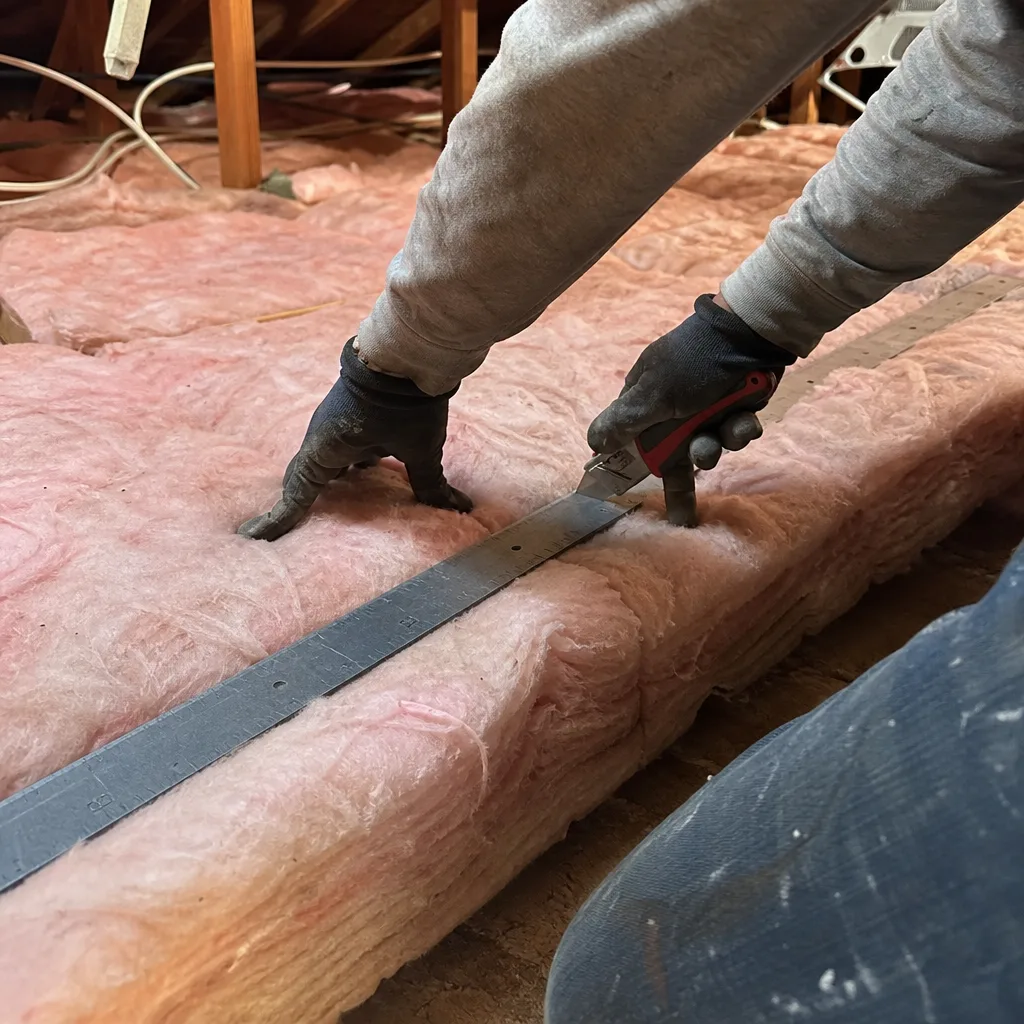
That’s why we carry eight manufacturer brands across fiberglass, mineral wool, spray foam, and cellulose categories. It means a 1998 tract home in 92557 can get a completely different assembly than a 2008 two-story in 92555, and both get the system that actually works for their construction. Noel Camacho built this approach because Moreno Valley’s housing stock demands it. You don’t fix a 148°F attic with guesswork.
Radiant Barrier in Moreno Valley
Radiant Barrier work in Moreno Valley is the single most effective upgrade for homes where summer attic temperatures sit north of 130°F. The product is a reflective foil laminate, typically stapled to the underside of roof rafters, that reflects radiant heat before it can radiate down into your insulation and living space. In this city’s high-desert-influenced climate, with long 100°F-plus summers and a sun that beats directly on tile and composition roofs, a properly installed radiant barrier can drop peak attic temperatures by 25 to 35 degrees.
Most Moreno Valley radiant barrier projects run $1,800 to $3,400 for a typical 1,800 to 2,600 square foot home, depending on roof pitch, access, and whether we’re also air sealing at the same time. We strongly recommend combining it with air sealing, and you’ll see why in the next section.
When the foil alone isn’t enough
Here’s the thing we see constantly in Moreno Valley’s 1990s tracts: a radiant barrier installed over gaps that were never sealed. The foil reflects radiant heat, but if the top plates above interior walls and the recessed can lights are unsealed, 145°F attic air still pours through those bypasses into the living space. The homeowner gets a modest improvement and wonders why the upstairs still won’t hold temperature. Air sealing first, radiant barrier second.
Radiant barrier with blown-in cellulose
If you already have blown-in cellulose that’s in acceptable condition, a radiant barrier on the rafter line works with it, not against it. The cellulose slows conductive heat transfer through the attic floor, and the foil stops radiant gain at the roof deck. Together, they do what neither does alone – which is exactly the combination many 92551 and 92556 homes need.
Attic Cleaning Services in Moreno Valley
Attic Cleaning Services in Moreno Valley are not a luxury add-on, especially for homes built between 1985 and 2005. Before we can assess insulation, air seal, or install a radiant barrier, we need visibility and a clean work surface. Twenty to thirty years of blown-in dust, rodent activity, old construction debris, and sometimes failed duct insulation all sit between us and the problem. Rodent droppings in the insulation are common in this area’s perimeter-adjacent lots, and they’re a legitimate health concern, not just a nuisance.
Attic cleaning in Moreno Valley typically runs $1,200 to $2,800, with the higher end covering full removal of contaminated insulation, sanitizing, and disposal. If you’re planning a full insulation replacement anyway, cleaning is the first phase, so pricing often packages together.
What gets removed
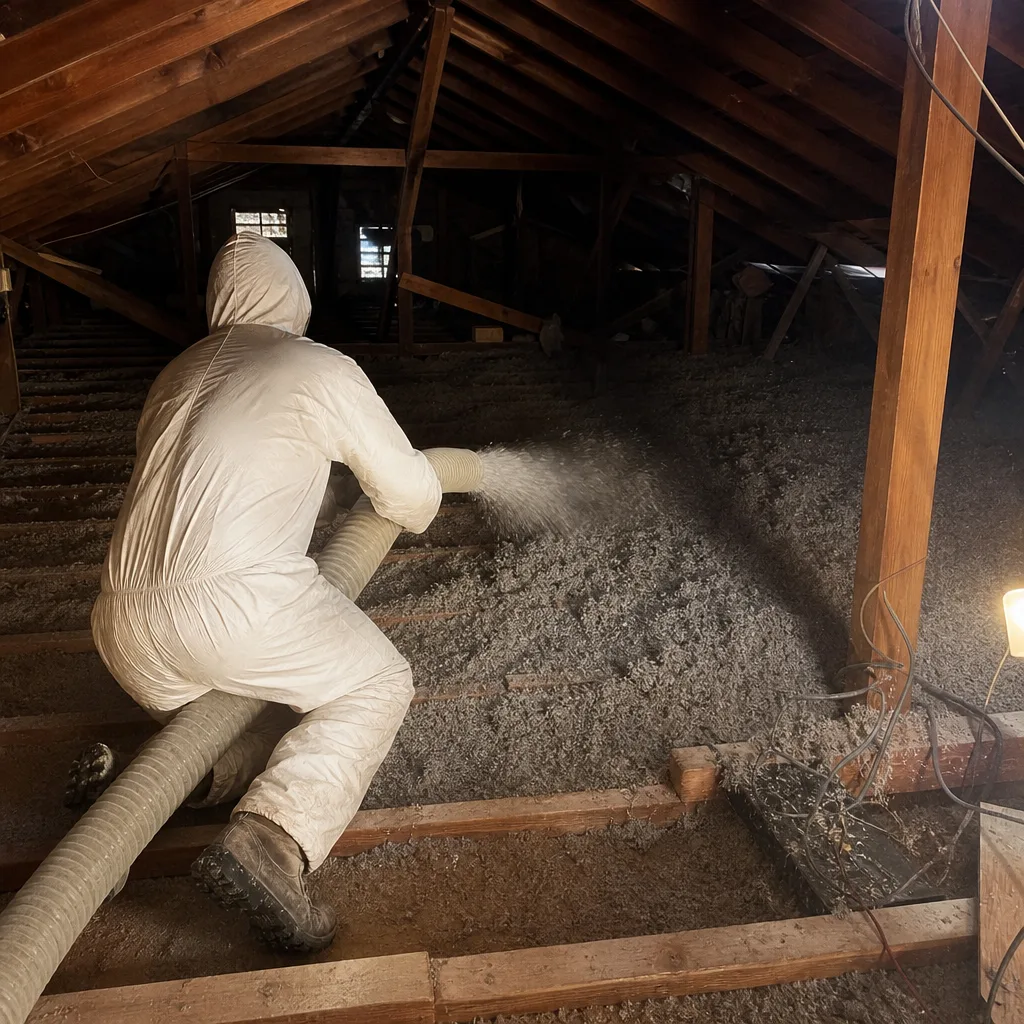
Old, compacted, or rodent-soiled insulation, duct debris, builder scraps from construction, and whatever previous owners left behind. In older Sunnymead-area and March-region homes, we regularly find recessed-can housings packed with blown dust that’s been recirculating into living space for years.
What you get after
A dry, visible, sealed attic where new insulation can actually perform. You’d be surprised how often the answer to “why is my house so dusty?” is the attic. Once we clean and air seal, indoor air quality improves within days, not weeks.
What happens when you call
- 1
A real person answersNo phone trees — you reach a local pro.
- 2
You get an upfront price rangeHonest numbers before anyone is dispatched.
- 3
A background-checked tech heads outLicensed & insured, dispatched right away.
- 4
You approve before work beginsNothing starts until you say go.
Trusted Brands We Service in Moreno Valley
For Moreno Valley projects, we install Owens Corning and CertainTeed fiberglass systems, Rockwool mineral wool for fire resistance and sound control, GreenFiber recycled cellulose for blown-in and top-up work, and Icynene or Demilec spray foam when closed-cell or open-cell applications are the right call. That’s a real material portfolio, not a single-brand distributor arrangement. We maintain local stock for the most common Moreno Valley applications – R-38 blown-in, R-19 batt, and radiant barrier rolls – so a typical attic top-up or radiant barrier project doesn’t wait on a supply run from the coast.
Common Attic Insulation Problems We See in Moreno Valley Homes
- Builder-grade R-11 batts compressed under blown-in cellulose. When a 1990s tract home gets a cheap cellulose blow, nobody removes or fluffs the original batts first. The result is a below-code effective R-value that leaves the home vulnerable, especially in 92557 and 92555 where original attics were built to 1992 Title 24 minimums, not current standards.
- Unsealed top plates and recessed can lights leaking 140°F+ air. In Moreno Valley’s 1990s tracts, blown-in cellulose often sits over unsealed wall cavities and can light housings. During summer, the stud cavities act like chimneys, drawing superheated attic air directly into bedrooms and hallways. You’ll feel it as hot walls by 5 p.m.
- Radiant barrier installed without first air sealing bypasses. The foil covers the roof plane, but heat still pours through gaps around duct chases, plumbing penetrations, and can lights. The barrier looks right from the hallway, performs half as well as it should, and the homeowner blames the product instead of the missing prep work.
- Warranty-period tune-ups skipped on 2000s-era tract homes. Most 2000s homes in Moreno Valley were never inspected after the first year. Duct boots loosen, insulation gets displaced by trades, and nobody knows until summer AC bills spike. By then, the system has been underperforming for a decade.
Pricing for Attic Insulation in Moreno Valley, CA
Attic insulation pricing in Moreno Valley breaks down into predictable ranges based on what your home actually needs. A blown-in top-up to bring a 1,200 to 1,800 square foot attic from R-19 to R-38 typically runs $1,400 to $2,600. Full removal and replacement of old, compacted, or contaminated insulation runs $2,800 to $5,500 for most tract homes in 92551 through 92557. Radiant barrier installation alone runs $1,800 to $3,400. Air sealing as a standalone service runs $900 to $1,800, and we discount it when bundled with insulation or radiant barrier work.
What changes the number: attic size, access difficulty, how much old material has to come out, and how many bypasses need sealing. We give exact, per-job quotes after an attic inspection, and estimates are free. Call (866) 605-6949 to schedule one.
We Also Serve Cities Near Moreno Valley
Our crews regularly work in Attic Insulation in Moreno Valley and the surrounding communities. We cover March Air Force Base, Woodcrest, Colton, and Loma Linda, and we’re familiar with the tract layouts and attic construction in each. If you’re in one of these nearby cities and your attic is underperforming, the same team and the same material portfolio apply.
Serving Moreno Valley, CA — Our Local Coverage Area
We’re based in the Moreno Valley area and know this community well. Use the map below to see our service coverage — if you’re nearby, we can almost certainly help.
FAQs About Attic Insulation in Moreno Valley
No, not without addressing what’s under and around those batts first. Homes built in Moreno Valley in the late 1980s typically have unsealed top plates, can light housings with zero air sealing, and duct chases that leak. If you blow cellulose or lay batts over that, you’re burying the problem. The right sequence for a 1988-era home in 92551 or 92557 is: inspect, air seal every bypass, then top up to R-38 or better. Adding R-value alone won’t stop 140°F air from short-circuiting your comfort. Call (866) 605-6949 and we’ll walk your attic with you before recommending anything.
Because Moreno Valley sits deep inland, past the Santa Ana Mountains, where marine influence is gone and the summer sun is direct and unrelenting. Coastal LA gets a marine layer that caps heat; Moreno Valley gets full sun from 10 a.m. to 7 p.m., pushing dark composition roofs to 160°F surface temperatures. That heat radiates into attic air, and without a radiant barrier plus adequate insulation, it transfers straight through your ceiling. It’s not your imagination, and it’s not just the weather. It’s physics working against an under-insulated attic.
Most likely yes, but only after we verify the cellulose is doing its job and the bypasses are sealed. In Moreno Valley’s 1990s tracts, blown-in cellulose often sits over unsealed top plates and can lights, so summer attic temperatures hit 140-150°F and the heat pours through gaps the cellulose doesn’t cover. A radiant barrier on the rafter line cuts the radiant load at the source. But if those bypasses remain unsealed, you’ll still feel hot air bleeding through. The correct fix is air sealing first, then radiant barrier, then top up the cellulose to R-38 if it’s low.
It’s the necessary first step on most 1980s and 1990s homes in 92551 through 92557. You can’t properly air seal, inspect, or install over contaminated, compacted, or debris-filled insulation. In this area, we frequently find rodent droppings, construction scraps, and decades of blown dust around can lights and duct boots. Cleaning removes the old material and sanitizes the space, giving us a clean surface for sealing and new insulation. On a full replacement project, it’s phase one, and pricing bundles together.
For radiant barrier work in Moreno Valley, we primarily use Owens Corning foil. For attic insulation, we install CertainTeed and Owens Corning fiberglass, Rockwool mineral wool where fire resistance and sound control matter, and GreenFiber recycled cellulose for blown-in and top-up applications. For spray foam applications where air sealing and R-value per inch are priorities, we install Icynene and Demilec systems. The brand follows the job requirement, not the other way around.
Written by Noel Camacho, Owner at Hollywood Insulation Co, serving Moreno Valley and the Inland Empire with dedicated attic insulation expertise.