
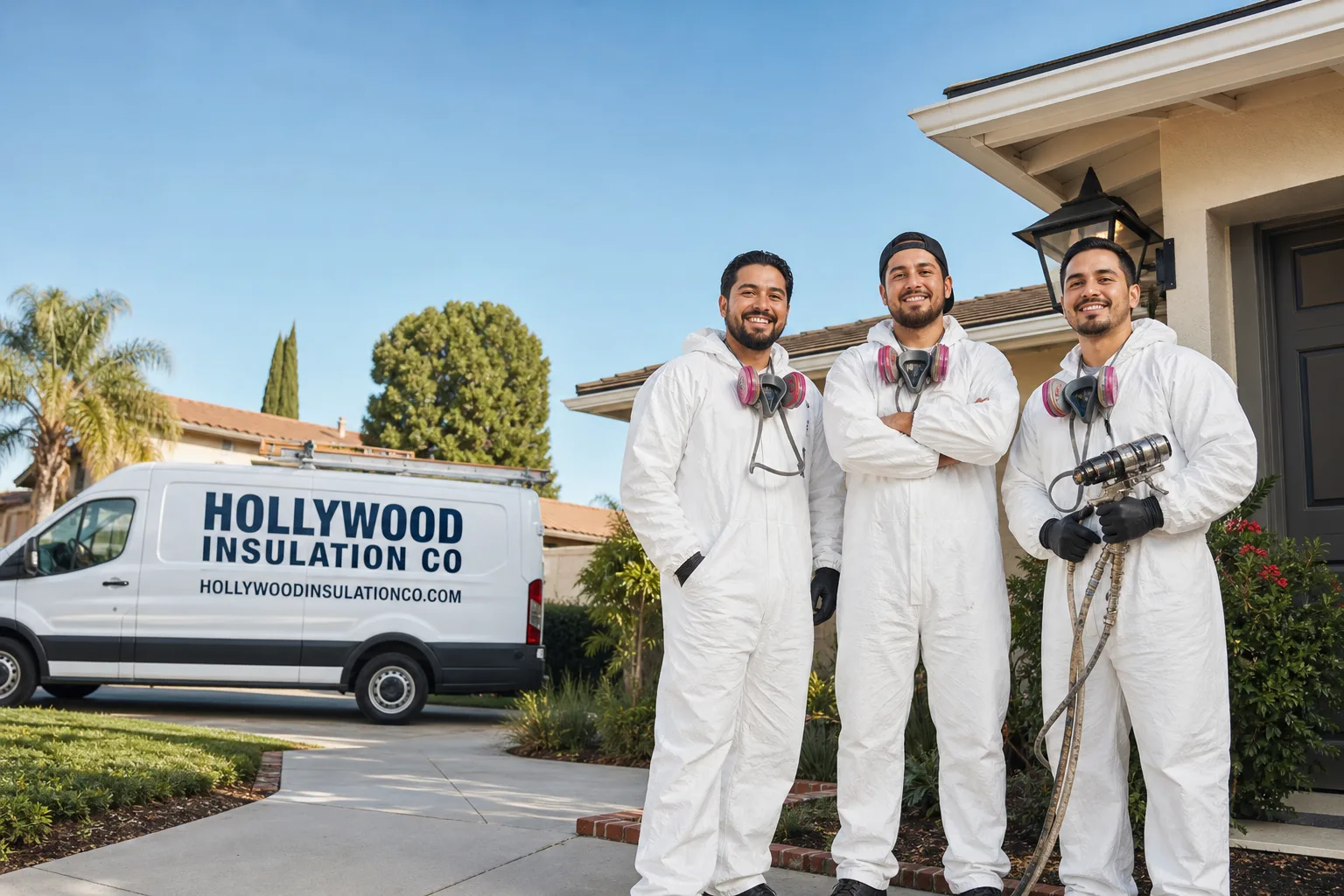
Fast, Reliable Attic Insulation Across Portola Hills
Attic insulation in Portola Hills usually costs between $1.50 and $4.00 per square foot depending on whether you’re topping up existing material, removing failed batts, or installing spray foam. Homes in the 92610 zip code run hotter than almost anywhere else in Orange County during Santa Ana events, and most were built with insulation that was barely adequate in the 1980s and 1990s. We know the tile-roof homes, the vaulted ceilings, and the specific heat problems that plague this foothill community. Call (866) 605-6949 for a free estimate, and we’ll have a technician out to Portola Hills quickly.
Why Hollywood Insulation Co Is Portola Hills’s Preferred Attic Insulation Company
We’re a dedicated insulation specialist, not a general contractor who happens to do insulation on the side. Every technician on our team works exclusively in this trade, so when we walk into a Portola Hills attic, we’re looking for thermal bypasses, choked baffles, and compressed batts, not sizing up a bathroom remodel. As our Attic Insulation team will tell you, the diagnosis matters as much as the install.
Our crews have worked on Bren-built homes throughout the Sycamore Hills and Tapestry tracts, and we understand how these specific floor plans and ceiling designs fail. We carry eight manufacturer brands, from Owens Corning and CertainTeed fiberglass to Icynene and Demilec spray foam, plus GreenFiber cellulose and Rockwool mineral wool. That means the material we recommend is the one that’s right for your attic, not whatever happens to be on the truck that day.
We offer three installation methods under one roof: blown-in, batt, and spray foam. No single method works for every Portola Hills home, especially with the vaulted ceilings and tile-roof access issues common here. Our team is led by Noel Camacho, who has built a reputation for honest material recommendations and careful attic work across Orange County and the foothill communities.
Attic Mold Removal in Portola Hills
Attic mold removal in Portola Hills is a critical service for homes caught in the foothill thermal belt, where hot days and cool nights create condensation cycles that few other Orange County communities experience. When warm attic air meets cold winter-morning drywall, moisture condenses inside the insulation and on the underside of the roof sheathing. Over time, that dampness feeds mold growth, especially in attics where crushed baffles have already strangled ventilation. Mold removal here typically runs $1,500 to $4,000 depending on the size of the affected area and whether the contaminated insulation must be removed along with it.
What We Do
We start by identifying the moisture source because mold always comes back if the airflow problem isn’t fixed. In Portola Hills, that usually means replacing crushed eave baffles or adding ventilation under a tile roof. Then we remove affected insulation, treat the sheathing and framing, and install new material that can handle the temperature swings this area dishes out.
When to Call
If you notice a musty odor in the upstairs hallway, see dark staining on the ceiling around recessed lights, or have family members experiencing unexplained allergy symptoms at home, it’s worth having an attic inspected. Mold from heat and winter swings in the 92610 area tends to hide in the vaulted ceiling cavities first. The sooner it’s caught, the less it costs to remediate.
Attic Insulation Removal in Portola Hills
Attic insulation removal in Portola Hills is often the necessary first step when original R-11 or R-19 batts have compressed to half their rated depth or been damaged by rodents, water, or years of 140°F attic heat. Many homes built in the 1980s and 1990s along Santiago Canyon Road and in the Ridgeline tract still have their original fiberglass batts, which were never designed to handle the Santa Ana heat loads this area experiences. Insulation removal typically costs $1 to $3 per square foot in Portola Hills, including bagging, removal, and disposal.
When Removal Makes Sense
If your insulation is torn, compacted, pest-contaminated, or fewer than 6 inches deep in a flat attic, you’ll almost always get better performance from removal and a fresh install than from simply blowing more material on top. Compressed batts have already lost most of their R-value, and adding material over damaged insulation doesn’t fix air leaks at the top plates or around recessed cans. Removal also gives us a clean look at the ceiling plane so we can air-seal before the new insulation goes in.
Access Challenges on Tile Roofs
Because so many Portola Hills attics can’t be accessed through the concrete tile lid, removal often requires cutting a temporary access hatch through the garage ceiling or opening up a hallway scuttle. We handle that work carefully and patch everything back to match. It’s a bigger job than a simple top-up, and the pricing reflects the extra time and labor.
Trusted Brands We Service in Portola Hills
We install and service attic insulation systems from eight recognized manufacturers, including Owens Corning fiberglass, Icynene and Demilec spray foam, and GreenFiber recycled cellulose. For Portola Hills homeowners, that means we can match the material to the specific problem, whether it’s radiant heat gain under a tile roof, air leakage through vaulted ceiling cavities, or a homeowner request for high recycled content. We stock common materials locally and can typically schedule Portola Hills jobs within a few days, not weeks.
One material worth highlighting for this area is a radiant barrier under the rafters. In Portola Hills attics where summer temperatures push past 140°F, an Owens Corning radiant barrier can cut heat transfer into the living space dramatically. Paired with R-38 blown fiberglass and properly installed baffles, it’s one of the most effective upgrades for those upstairs bonus rooms that turn into ovens during Santa Ana events.
Common Attic Insulation Problems We See in Portola Hills Homes
- Compressed original batts in vaulted ceilings: The R-11 and R-19 fiberglass installed in 1980s and 1990s Bren-built homes was barely minimum code for the era. After decades of heat, gravity, and occasional roof repairs, it’s often compressed to half its original depth and doing almost nothing. Upstairs rooms over these ceilings heat up fast when attic air radiates through thin drywall.
- Missing or crushed eave baffles under tile roofs: Low-slope tile roofs leave tight eave spaces where baffles get crushed during construction or by later roof work. When intake ventilation chokes, the attic can’t shed heat, and the temperature climbs well past what any insulation was designed to handle. This is one of the most common problems we find in the Sycamore Hills and surrounding tracts.
- Unsealed top plates and recessed can lights: In two-story Portola Hills homes, gaps where interior walls meet the attic floor, plus unsealed recessed light housings, act as chimneys for hot and cold air. These bypass the insulation entirely. Air sealing is the first thing we do before adding new material, because insulation alone can’t fix a leaky thermal envelope.
- Heat-striped ceilings under tile roofs: We regularly see long dark stripes on the drywall above second-floor rooms, which are thermal ghosting where hot attic air has been radiating through the ceiling framing. It’s a visible sign that the insulation has failed and the ceiling has been cooking from above during every summer heat wave.
Pricing for Attic Insulation in Portola Hills, CA
Here’s what you can expect to pay for attic insulation work in Portola Hills. A blown-in attic top-up typically runs $0.90 to $1.50 per square foot. Full attic insulation replacement with removal, air sealing, and new R-38 blown fiberglass runs $3 to $5 per square foot. Spray foam insulation, either Icynene open-cell or Demilec closed-cell, is the premium option at $3.50 to $7 per square foot, and it’s often the right choice for vaulted ceilings where space is tight and air sealing is critical. Batt insulation for accessible attics runs $1.50 to $3 per square foot installed. The biggest cost variables are ceiling access difficulty, whether old insulation needs removal, and how much air sealing is required. Call (866) 605-6949 for a free estimate with real numbers for your specific home.
We Also Serve Cities Near Portola Hills
Our Attic Insulation in Portola Hills team covers the entire 92610 area, and we regularly work in Foothill Ranch, Lake Forest, Mission Viejo, and Trabuco Canyon. The same tile-roof and Santa Ana challenges show up throughout the foothill communities, so we’re already familiar with the housing stock and the fixes that work. If you’re in a neighboring city, the same crew and the same honest material recommendations apply.
Serving Portola Hills, CA — Our Local Coverage Area
We’re based in the Portola Hills area and know this community well. Use the map below to see our service coverage — if you’re nearby, we can almost certainly help.
FAQs About Attic Insulation in Portola Hills
Because most Portola Hills homes have concrete clay tile roofs that make lid access through the roof itself impractical, and many have vaulted or cathedral ceilings that leave no attic cavity to blow into at all. On a 1990s Bren-built home in the Sycamore Hills tract off Santiago Canyon Road, we found the original R-19 batts compressed to half their depth and heat-striped along the vaulted ceiling. We had to cut a temporary hatch from the garage, pull the failed batts, and air-seal the top plates before installing fresh material. Blowing new insulation over the top would have left the failed batts and air leaks in place. Call (866) 605-6949 and we’ll tell you what your specific home needs.
Santa Ana winds drive hot, dry air down the Santiago Canyon corridor and push attic temperatures in Portola Hills well past 140°F under tile roofs. That’s roughly 20 to 30 degrees hotter than what coastal Orange County attics experience during the same events. Your insulation has to handle that heat load without breaking down, and original 1980s and 1990s fiberglass simply wasn’t up to the task. Radiant barriers and upgraded R-values are the practical fix.
The most common culprits in Portola Hills are compressed batts in vaulted ceilings, crushed eave baffles, and unsealed top plates around recessed cans. The homes here have open floor plans with plenty of vaulted ceilings, and the original insulation in those sloped cavities degrades faster than anything in a flat attic. Upstairs rooms over these spaces can run 10 to 15 degrees warmer than the rest of the house during a Santa Ana event. The fix is usually targeted removal, air sealing, and re-insulation with a material suited to sloped cavities.
Yes. Vaulted and cathedral ceilings have shallow cavities, so standard blown-in fiberglass often doesn’t fit well and can settle, leaving gaps. Spray foam, particularly Icynene open-cell or Demilec closed-cell, fills the sloped cavity completely and air-seals it at the same time. Batt material can work if installed carefully with baffles to maintain a ventilation channel under the roof sheathing. The right choice depends on the depth of your cavities and whether the tile roof above can be ventilated effectively.
Look for dark staining on the underside of the roof sheathing, a musty smell in upstairs hallways, or discoloration around recessed light fixtures in top-floor ceilings. The foothill thermal belt creates condensation cycles that coastal cities don’t experience, so mold in attics here is more common than most homeowners realize. If you suspect mold, the first step is an inspection. The sooner it’s addressed, the less expensive the remediation and re-insulation will be. Call (866) 605-6949 and we’ll arrange a look.
Written by Noel Camacho, Owner at Hollywood Insulation Co, serving Portola Hills and the greater Orange County foothill communities.