Attic Insulation Pricing Breakdown: What Hollywood Homeowners Pay in 2026
In Hollywood, CA, attic insulation projects in 2026 typically run between $1,800 and $6,500 for a standard 1,200-square-foot attic, with spray foam landing higher at $4,200 to $9,800. The spread comes down to material choice, attic access conditions, whether old insulation needs removal, and Title 24 compliance triggers. If you’d rather skip the math and get a straight number for your house, call (866) 605-6949 for a free estimate.
A 1,200-square-foot attic in Hollywood can legitimately quote between $1,800 and $6,500 for new blown-in insulation. Not because one contractor is gouging and another is honest. Because four specific job-site variables that most price guides ignore can each add 15 to 30 percent to base material cost. We’ve seen two homes on the same street in the Hollywood Hills quote $2,400 apart with identical square footage. The difference was access, removal, and code compliance, not anyone’s markup.
Key Takeaways
- Cost-per-R-value is the metric that matters, not cost-per-square-foot. Blown-in fiberglass and cellulose routinely beat spray foam on this measure even though spray foam insulates better per inch.
- Attic access conditions can swing labor cost by $400 to $1,200 on the same job. A scuttle hatch versus a pull-down stair versus no access at all changes hours, not materials.
- Old insulation removal in Hollywood homes built before 1990 often adds $1.50 to $3.50 per square foot, and vermiculite remediation can push that significantly higher.
- Title 24 compliance can add $200 to $900 when you’re changing insulation levels in a way that triggers California’s energy code update requirements.
- A lowball quote usually omits air sealing, baffle installation, or removal of degraded material. Those aren’t optional if you want the insulation to actually perform.
Material Costs in Hollywood: Cost Per R-Value, Not Per Square Foot
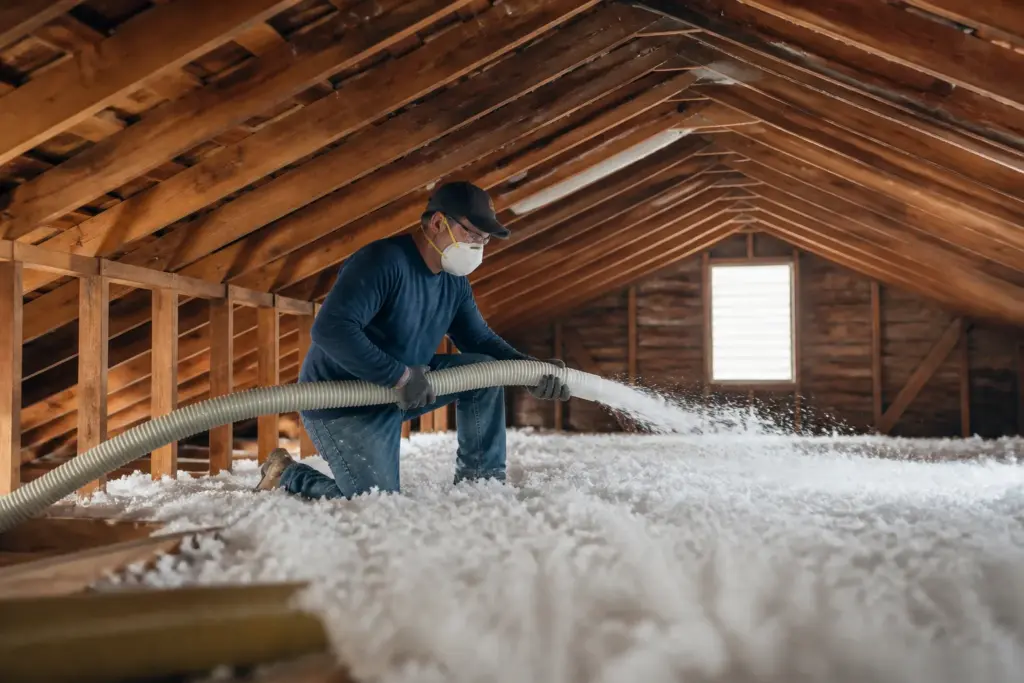
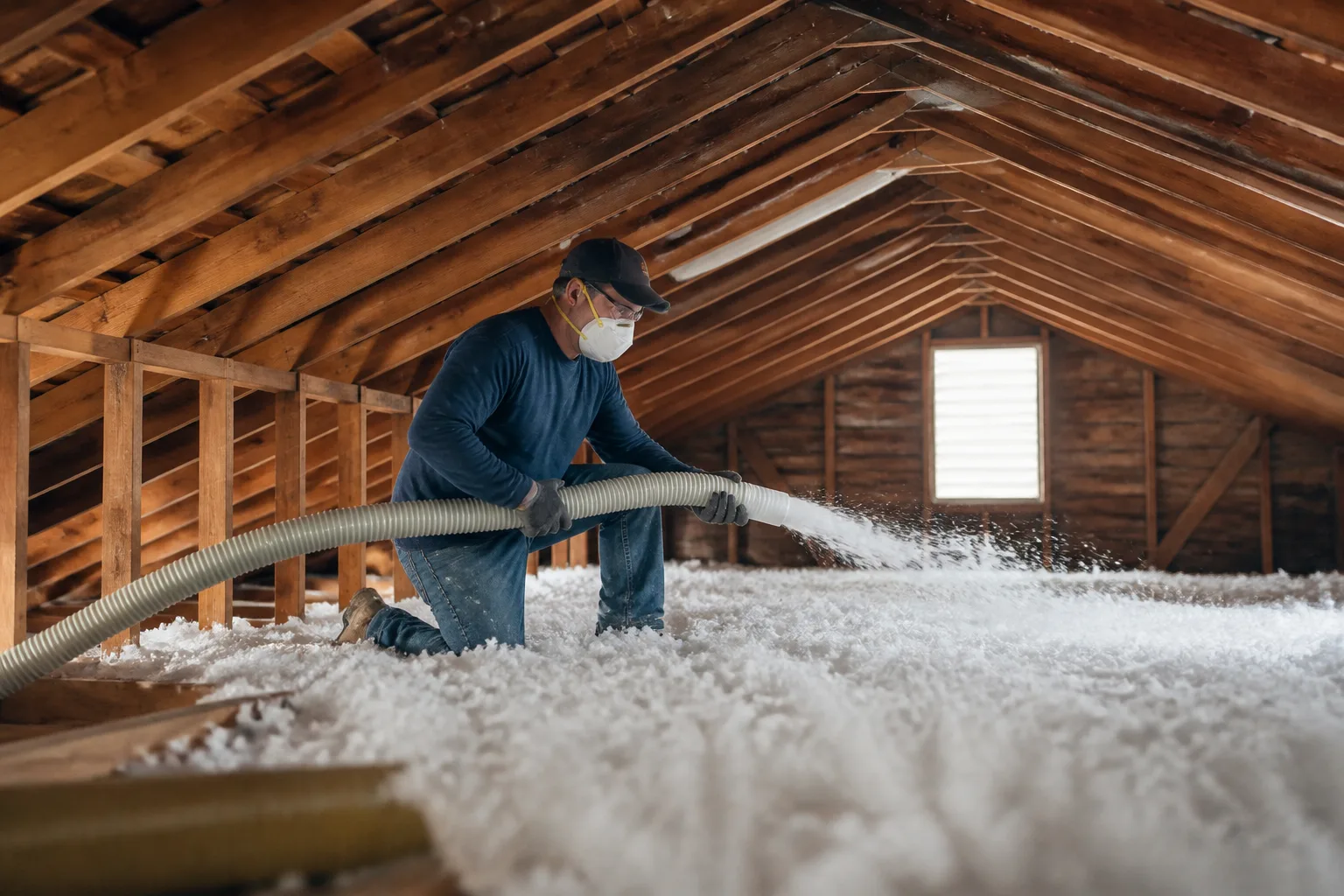
Most published price guides quote insulation by square foot. That’s useful for rough budgeting but nearly useless for comparing materials. The metric that predicts performance per dollar is cost per R-value, and it changes the ranking entirely.
Here’s what Hollywood homeowners should expect in 2026, normalized to a 1,200-square-foot attic with R-38 as the target:
- Blown-in fiberglass (Knauf or CertainTeed): $1.50 to $2.80 per square foot installed. R-38 achieves roughly R-2.2 to R-2.7 per inch. Best cost-per-R of any common attic material, typically $0.04 to $0.07 per R per square foot.
- Blown-in cellulose (GreenFiber): $1.80 to $3.20 per square foot installed. Slightly better air-blocking properties than fiberglass at the same R-value, and the recycled-content angle matters to some Hollywood buyers. Cost per R lands close to fiberglass.
- Fiberglass batts (Owens Corning or Johns Manville): $2.00 to $3.50 per square foot installed. Lower cost than spray foam but more labor-sensitive; batts perform poorly if compressed or installed around irregular framing, which most pre-1980s Hollywood attics have in abundance.
- Open-cell spray foam (Icynene): $3.50 to $6.50 per square foot. R-3.7 per inch, plus real air-sealing. Higher material cost but eliminates the separate air-sealing line item.
- Closed-cell spray foam (Demilec): $5.50 to $9.50 per square foot. R-6.5 per inch, structural rigidity, and a vapor barrier built in. Overkill for most Hollywood attics unless you’re doing an unvented roof assembly, but the right call for flat roofs and some mid-century designs.
The takeaway: blown-in fiberglass or cellulose wins on pure cost-per-R almost every time. Spray foam wins when the attic is part of the conditioned envelope or when air leakage is the dominant problem. In Hollywood’s older hillside homes, where attics are often irregular and leaky, we sometimes spec open-cell Icynene not because it’s cheaper but because the air-sealing value changes comfort more than adding R-value to a leaky ceiling ever will. That’s the difference between buying insulation and buying an insulated building envelope.
Attic Access: The Silent Labor Multiplier
You can’t insulate an attic you can’t get into. In Hollywood, we deal with three access conditions that directly control how many labor hours a job takes, which is the biggest variable cost after material.
Pull-down stair: This is the easiest access condition and what price guides assume. A 22-1/2-inch by 54-inch opening with a functioning ladder lets a crew move bags or batts efficiently. Labor stays near the low end of published ranges. But we’ve seen plenty of Hollywood pull-down stairs installed with undersized framing that blocks a 24-inch-wide batt, which forces batt jobs to switch to blown-in or eat extra cutting time.
Scuttle hatch: Common in 1940s and 1950s Hollywood bungalows, including a lot of the Spanish-style homes north of Melrose. A scuttle hatch is typically 22 by 30 inches in a hallway ceiling, which means every bag of material and every tool goes up by hand through a small opening. This adds 25 to 40 percent to labor hours versus a pull-down stair. On a blown-in job, the machine stays outside and a 4-inch hose runs through the hatch, so the penalty is smaller. On a batt job or spray foam job, the crew time penalty is real and shows up in the quote.
No existing access: Some Hollywood homes, especially converted attics or flat-roof mid-century builds, have no attic access at all. A contractor has to cut in a new access hatch, which typically costs $600 to $1,200 in Hollywood, and that’s before any insulation goes in. If you’re also adding ventilation changes, which many flat-roof Hollywood homes need, the structural work multiplies.
The takeaway: when you compare quotes, confirm both contractors are quoting the same access scenario. A $2,900 quote that assumes a pull-down stair is not a better deal than a $3,400 quote that includes cutting a new scuttle hatch. It’s a different scope.
Removal Costs: When the Old Stuff Has to Go First
Not every attic needs old insulation removed before new insulation goes in. But when it does, the price difference between simple removal and remediation is stark, and a lot of Hollywood homeowners get surprised by it.
Simple loose-fill removal: Sucking out old blown-in fiberglass or cellulose with a commercial vacuum runs $1.50 to $2.50 per square foot in Hollywood. On a 1,200-square-foot attic, that’s $1,800 to $3,000 before new material. This is the right call when old insulation is compressed, rodent-damaged, water-damaged, or simply below the performance threshold for current Title 24 expectations.
Batt removal: Pulling old fiberglass batts by hand costs $1.50 to $3.00 per square foot. Labor-intensive because it’s bagging and hauling dusty material down a scuttle hatch or pull-down stair. In Hollywood’s tighter attics, expect the higher end.
Vermiculite remediation: Some Hollywood homes built before 1980 have vermiculite attic insulation, which can contain asbestos. Testing runs $100 to $300. If it’s positive, remediation is a regulated abatement process handled by a licensed asbestos contractor, and the total cost can reach $10 to $15 per square foot. This is not a job for a general insulation crew. We’ve been on Hollywood jobs where a vermiculite discovery stopped work on day one, and the homeowner was glad the material got tested before anyone disturbed it. If your house is pre-1980 and you don’t know what’s up there, get it tested before anyone starts moving material around.
The takeaway: a quote that doesn’t mention existing attic conditions isn’t a complete quote. If the contractor never looked in the attic, they haven’t priced the job.
Title 24 and Permitting: What Actually Triggers the Extra Cost
California’s Title 24 energy code applies in Hollywood and across Los Angeles. Whether your insulation job triggers a permit depends on what you’re changing, and the compliance cost ranges from zero to several hundred dollars.
Replacing insulation like-for-like, for example, adding new blown-in fiberglass on top of existing blown-in fiberglass without changing the roof or ceiling structure, generally does not require a permit in Hollywood. Re-insulating an attic that’s part of a larger remodel where the ceiling is opened, the roof assembly changes, or the HVAC system gets replaced with different capacity does trigger Title 24 documentation.
What Title 24 actually requires for attics in Hollywood’s climate zone (which is mostly CZ8 and CZ9, the mild coastal-influenced zones plus hotter inland pockets):
- Minimum R-30 for existing attics, R-38 when the space is being re-insulated as part of a permitted remodel, and R-49 in some inland Hollywood-adjacent zip codes that fall into CZ10.
- Radiant barrier requirements vary: Hollywood proper rarely mandates it, but some hillside homes in sun-blasted exposure zones benefit from it regardless.
- Air sealing and duct testing may be required if the HVAC system lives in the attic, which many 1950s and 1960s Hollywood homes do. Sealing the attic floor and upgrading ducts can add $1,500 to $4,000 on top of insulation.
The compliance paperwork itself, when required, adds $200 to $600 in Hollywood. That’s the cost of HERS verification or the local building department’s energy review. It’s not a scam fee. It’s the cost of a job that’s actually legal when you sell the house. And in Hollywood, where homes change hands fast, an unpermitted insulation project from five years ago shows up in disclosure and complicates the sale. We’ve had buyers call us asking for a retroactive fix because a flipper cut corners. It’s always more expensive than doing it right the first time.
How to Read an Insulation Quote: The Line Items That Expose a Lowball
Two Hollywood insulation quotes can differ by 60 percent and both be honest. The gap is in scope, not margin. Here’s what to look for when you line them up.
- Air sealing as a line item: If one quote includes attic floor air sealing at $800 to $1,500 and the other doesn’t mention it, the cheaper quote isn’t comparable. Air sealing is where most of the comfort gain comes from in a leaky Hollywood attic. We consider it non-negotiable on blown-in jobs.
- Baffle installation: Soffit vents need baffles to keep blown-in material from blocking airflow. That’s $4 to $8 per baffle, and a 1,200-square-foot attic might need 12 to 20 of them. If it’s not listed, check whether the contractor assumes the existing baffles are fine. Often in Hollywood’s older homes, there are no existing baffles.
- Depth markers and R-value verification: A proper quote specifies a target depth in inches and a final R-value. “Blow R-38” is a number. “Blow 14 inches of fiberglass” is also a number. You want both.
- Access and prep work: Any quote that omits how the crew gets into the attic and what they’ll do with existing material isn’t final.
We once quoted a home in the Hollywood Dell where the competing bid came in $1,700 under ours. The homeowner asked why. The other quote assumed a pull-down stair (the house had a 20-inch scuttle), skipped air sealing entirely, and made no allowance for the rodent droppings and compressed loose-fill that had to come out first. By the time the other contractor would have “discovered” those items mid-job, the change orders would have pushed the total past our number. A detailed quote looks more expensive to the untrained eye. It’s usually just honest.
Spray Foam vs Blown-In vs Batts in Hollywood: When Each Actually Makes Sense
This is the question behind every pricing conversation, so let’s answer it directly. Hollywood homes cluster into a few architectural eras, and the era often dictates the right method.
1920s to 1940s Spanish and bungalow attics: Irregular rafter spacing, shallow ceiling pitches, no sheathing continuity. Batts are hard to install well here because framing is inconsistent. Blown-in cellulose or blown-in fiberglass fills the irregular cavities better. If the attic is vented, blown-in is usually the right call. If it’s not vented and you’re sealing it off, open-cell Icynene foam on the roofline changes the building physics and works.
1950s to 1970s ranch and hillside homes: These often have HVAC equipment in the attic and ductwork running through unconditioned space. This is the scenario where air sealing matters more than added R-value. We’ve seen open-cell Icynene on the roofline cut summer attic temperatures by 30 degrees in a hillside Hollywood home because it moved the thermal boundary to the roof. That’s a comfort change you can’t get from more blown-in on the ceiling.
Flat-roof mid-century and contemporary builds: Little to no traditional attic space. Closed-cell Demilec foam on the underside of the roof deck is frequently the only practical option for hitting Title 24 numbers without rebuilding the roof. It’s the most expensive per square foot, but the alternative is a roof tear-off, which dwarfs any insulation number.
For most vented attics in Hollywood, blown-in fiberglass with proper air sealing is the cost-to-performance winner. That’s not what you’ll hear from a spray foam-only contractor. It’s what you’ll hear from us because we install all three methods and Hollywood Insulation Co home has no incentive to push one over another. The material should match the house.
The Bottom Line
Hollywood attic insulation pricing in 2026 is a function of four things: material type, access conditions, existing material removal, and Title 24 compliance. Published per-square-foot ranges are starting points, not answers. A 1,200-square-foot attic runs $1,800 to $6,500 for blown-in work and $4,200 to $9,800 for spray foam, and the difference between the low and high end is usually job-site reality, not contractor greed. The best way to see which variables apply to your house is to get someone to actually look in the attic. If you’re in Hollywood and want a straight answer, Attic Insulation in Hollywood is our core service, and we show up with a headlamp before we show up with a number. Call (866) 605-6949 for a free estimate.
Frequently Asked Questions
For a standard 1,200-square-foot attic in Hollywood, blown-in fiberglass or cellulose insulation costs $1,800 to $6,500 installed, fiberglass batts run $2,400 to $4,200, and spray foam ranges from $4,200 to $9,800 depending on open-cell versus closed-cell and attic configuration. Call (866) 605-6949 for a free estimate specific to your home.
Spray foam is worth it when the attic is part of the conditioned envelope or when air leakage is the primary comfort problem, which is common in Hollywood homes with attic HVAC systems and ductwork. For a standard vented attic, blown-in fiberglass with proper air sealing delivers better cost-per-R-value. We install both methods so the recommendation follows the house, not the truck.
You need removal if the old material is compressed, water-damaged, rodent-infested, or contains vermiculite. Simple removal in Hollywood costs $1.50 to $3.00 per square foot. Vermiculite that tests positive for asbestos requires licensed abatement and can cost $10 to $15 per square foot. If no one has looked in your attic, no one has actually priced your job.
Adding insulation on top of existing material without structural changes typically does not require a permit in Hollywood. A remodel that opens the ceiling, changes the roof assembly, or replaces HVAC capacity can trigger Title 24 documentation, which adds $200 to $600 in compliance costs. If you’re unsure, call us at (866) 605-6949 and we’ll tell you whether your project needs paperwork before we quote it.
Written by the team at Hollywood Insulation Co, serving Hollywood since 2018.
Need Insulation Help?
Call Hollywood Insulation Co — licensed & insured, here with fast after-hours help in Hollywood.
(866) 605-6949